
NEWYou can now listen to Fox News articles!
One weekly routine could help foster better sleep and promote healthy weight loss, according to a New Jersey-based registered dietitian.
Erin Palinski-Wade, who is also a certified diabetes care specialist and author of "The Sleepdemic Solution," shared her "seven-day reset" in an interview with Fox News Digital.
The reset combines sleep, nutrition and lifestyle strategies into a five-part system represented by the acronym SLEEP.
SKIPPING SLEEP MAY PACK ON POUNDS FASTER THAN YOU THINK, NEW STUDY FINDS
In a test panel conducted in connection with her seven-day program, Palinski-Wade said participants reported improvements in sleep, blood sugar and weight.

Registered dietitian Erin Palinski-Wade joined Fox News Digital for an interview to discuss her new book, "The Sleepdemic Solution." (Angelica Stabile/Fox News Digital)
Experts recommend consulting a healthcare professional for individualized guidance before making significant changes to diet, sleep or lifestyle habits, particularly for those with underlying health conditions.
POPULAR WEIGHT-LOSS DRUGS MAY HELP PROTECT AGAINST A DEADLY DISEASE, DOCTOR SAYS
Palinski-Wade emphasized that results varied among participants with different sleep challenges. The panel included shift workers, mothers and people with long-term insomnia.
Despite those differences, within the first two to three days, the expert said people "across the board" reported falling asleep faster, getting higher-quality sleep and feeling more rested the next day.

People "across the board" reported falling asleep faster, getting higher-quality sleep and feeling more rested the next day, the nutritionist said. (iStock)
Panelists with pre-existing insulin resistance or type 2 diabetes also reported improvements in blood sugar levels, Palinski-Wade said.
"Once they were resting better and those stress hormones were reduced, and the body was getting the rest it needed, we were seeing better balanced blood sugar throughout the day," she noted.
Participants also reported improvements in hunger and satiety.
DOCTORS SAY 8 FORGOTTEN HABITS COULD HELP FIGHT STRESS, OBESITY AND CHRONIC DISEASE
"They weren't having those cravings, especially in the evening, especially those sugar cravings," Palinski-Wade said. "When they were eating, they were feeling more satisfied."
"I had a few test panel members who lost as much as seven pounds in the first seven days," she said, noting that some of the loss was water weight.
Participants reported reductions in weight and waist circumference and improvements in blood sugar, sleep and next-day energy.
The Reset
Below, Palinski-Wade breaks down the five components of the SLEEP system.
S – Set your rhythm

Setting a rhythm involves timing meals consistently to help improve sleep. This means avoiding skipped meals, which can lead to blood sugar fluctuations throughout the day. (iStock)
Setting a rhythm involves timing meals consistently to help improve sleep. This means avoiding skipped meals, which can lead to blood sugar fluctuations throughout the day, Palinski-Wade said.
CLICK HERE FOR MORE HEALTH STORIES
"We want to be fueling our body all throughout the day so that our body is expecting to sleep in the evening," she said.
Skipping meals and consuming excess food and calories in the evening tells the body that it's time to burn energy, which is not going to be conducive to sleep, according to the expert.
L – Leveraging light

Getting exposure to sunlight in the morning and limiting exposure at night will help set a natural circadian rhythm. (iStock)
Exposure to sunlight within the first hour of waking can help set the body’s circadian rhythm, Palinski-Wade noted.
"When your body gets that natural light, whether you go outside or put your desk by the window, that's helping your body get more in tune with that rhythm where you're awake," she said.
CLICK HERE TO DOWNLOAD THE FOX NEWS APP
In the evening, Palinski-Wade recommends dimming the lights and avoiding electronics and bright overhead lighting, which helps the body wind down and prepare for restful sleep.
E – Eat with intention

Eating with intention means choosing meals and snacks with nutrients that support healthy sleep, the expert said. (iStock)
Eating with intention means choosing meals and snacks with nutrients that support healthy sleep, according to Palinski-Wade.
CLICK HERE TO SIGN UP FOR OUR HEALTH NEWSLETTER
"Whether it's serotonin and tryptophan, anti-inflammatory nutrients, we want to make sure that we're eating with intention, so we're giving our body the building blocks it needs to create sleep in the evening," she said.
E – Evening out blood sugar
Palinski-Wade recommends combining lean protein, healthy fats and fiber to help keep blood sugar steady throughout the day and support better sleep.
P – Powering down your night
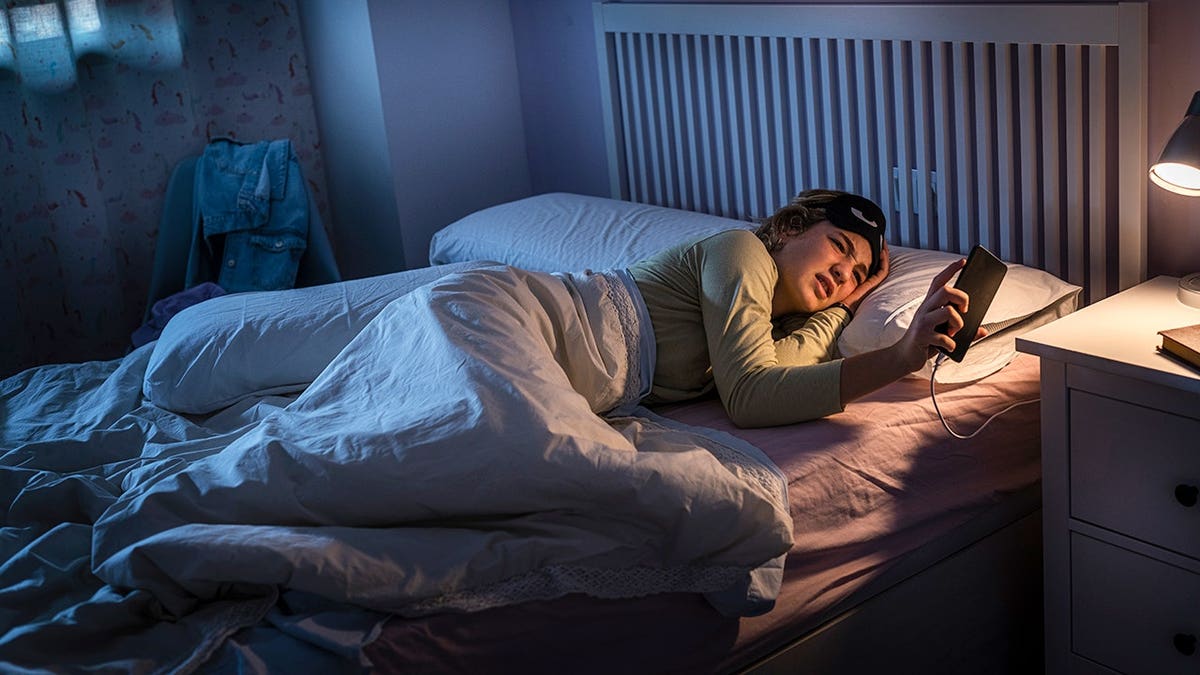
Powering down electronics at night will help induce more sound sleep. (iStock)
Powering down involves creating a consistent nighttime routine, including limiting electronics and caffeine and maintaining regular sleep and wake times, according to Palinski-Wade.
"That also applies to having a set bedtime and a set wake time ... in those seven days to reset that circadian rhythm, so we can have the best results moving forward," she said.
"We want to be fueling our body all throughout the day so that our body is expecting to sleep in the evening."
For those who are "trying everything," like diet and exercise, without seeing results, Palinski-Wade stressed that it is "not because you don’t have enough willpower."
"It could just be your biology working against you, and many times it's as simple as improving your sleep," she said. "If you start to improve your sleep within just a few days, you can see major changes in how you feel, how your body is processing food, in your metabolism, and then ultimately in your body weight."
TEST YOURSELF WITH OUR LATEST LIFESTYLE QUIZ
External research by the National Institutes of Health has also linked adequate sleep with appetite regulation and healthy weight management.
The National Heart, Lung, and Blood Institute states that sleep helps regulate hormones involved in hunger and fullness, while sleep deficiency can affect the body's response to insulin and has been linked to a higher risk of obesity.
Angelica Stabile is a lifestyle reporter for Fox News Digital.