By
Kerry Breen
News Editor
Kerry Breen is a news editor at CBSNews.com. A graduate of New York University's Arthur L. Carter School of Journalism, she previously worked at NBC News' TODAY Digital. She covers current events, breaking news and issues including substance use.
/ CBS News
A University of Kentucky project using artificial intelligence to help decode an ancient Roman mystery has led to a major discovery, researchers announced Thursday.
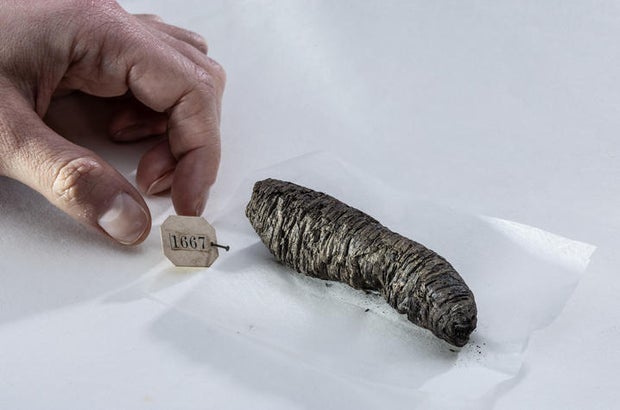
In 79 A.D., the eruption of Mount Vesuvius buried the Roman city of Pompeii and the nearby town of Herculaneum. During a dig in Herculaneum in the 18th century, archaeologists found 1,800 papyrus scrolls in an intact ancient library, deep under the site of a villa that was destroyed by Vesuvius' eruption. But reading them was impossible: The scrolls are brittle and charred, and unravelling them turns them into ash.
For centuries, researchers have worked to interpret the scrolls. Recent technology led to a breakthrough: A particle accelerator and AI were used to identify ink, even faint traces, allowing researchers to virtually unwrap the delicate scrolls. But interpreting the ancient language is another project entirely.
In 2023, Brent Seales launched the Vesuvius Challenge, a global competition offering prize money for those who can help interpret the writing. Three college students became the first to extract words from a carbonized scroll in 2024. But they only interpreted about 5% of one scroll.
The second phase of the challenge led to Thursday's major discovery. The University of Kentucky's Stanley and Karen Pigman School of Engineering, which leads the research in collaboration with the Biblioteca Nazionale di Napoli Vittorio Emanuele III in Naples, said that experts have virtually unwrapped one entire scroll, recovered more than 70 columns of text from another, identified two new books from ancient Rome, and recovered "sufficient text to support new critical scholarly editions."
The virtually unwrapped scroll, PHerc. 1667, is one of the oldest in the collection, Nicolardi said. Now that it has been unrolled, efforts to determine the authorship of the paper is underway. One of the books revealed that the philosopher Philodemus wrote an eight-book series. Only one book had been previously known to exist.
"For nearly two millennia, many of these texts have been physically preserved but intellectually inaccessible," Seales said in a news release. "Today — after years of interdisciplinary work combining advanced imaging, artificial intelligence (AI), academic research and an innovation contest — we are finally able to read them."
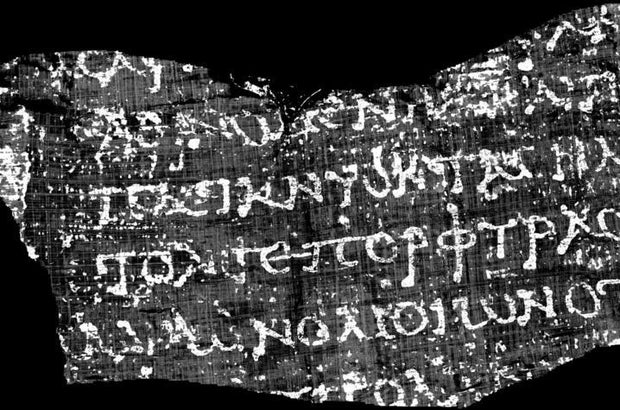
The amount of text revealed means scholars can read the scrolls as complete arguments, rather than as fragments. Federica Nicolardi, an assistant professor in papyrology at the Università degli Studi di Napoli Federico II in Naples, said that marks a "transformational shift" for researchers.
"Today, we are hearing voices that have been silent for 2,000 years," Seales said. "For the first time, we are uncovering and reading them — but most importantly — we are beginning to understand them."
Still, more than 600 scrolls remain unopened and unread. Giorgio Angelotti, a project lead with the Vesuvius Challenge, said the effort is "ongoing" and that archaeologists need "everyone's help to read the scrolls." Seales said he believes the entire library can be deciphered.
"This is no longer just about imaging or machine learning," Seales said. "Now we need experts who can read, edit and understand what they are saying."
In: