By
Emily Mae Czachor
News Editor
Emily Mae Czachor is a reporter and news editor at CBSNews.com. She typically covers breaking news, extreme weather and issues involving social justice. Emily Mae previously wrote for outlets like the Los Angeles Times, BuzzFeed and Newsweek.
/ CBS News
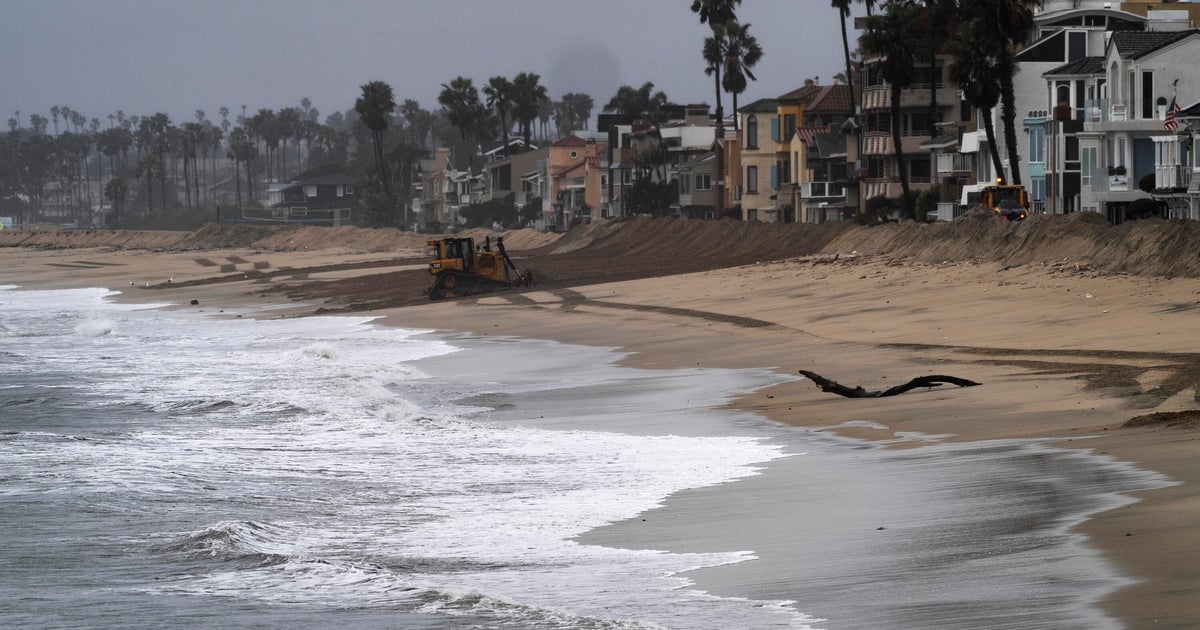
Scientists are warning that El Niño, a weather pattern forecast to emerge this summer, could bring frequent and widespread flooding even without the presence of storms.
Conditions fueling the threat are twofold and have been brewing for years, according to the National Oceanic and Atmospheric Administration, the federal agency responsible for weather and climate monitoring.
"It usually ends up being a double whammy," said William Sweet, an oceanographer at NOAA. "The first punch is decades of sea level rise, which has waters close to the brim in many coastal communities. And now with this second punch — a strong El Niño — coastal communities face more frequent, deeper and widespread high tide flooding along both the West and East Coasts."
Sweet specializes in "high tide flooding," an increasingly common situation making coastal regions more prone to inundation because of rising sea levels.
El Niño is one component of the El Niño-Southern Oscillation, or ENSO, cycle, an atmospheric phenomenon that results in alternating weather patterns that shift every two to seven years, according to NOAA. The cycle is currently in its neutral phase, after transitioning out of its cooler phase, La Niña, earlier this year.
Forecasters have predicted El Niño, the warmer phase of ENSO, will emerge soon. NOAA's Climate Prediction Center said last week there's at least an 82% chance it will arrive by July and continue through February in the Northern Hemisphere.
El Niño also causes trade winds to weaken across the tropical Pacific Ocean, setting off a chain of events that ultimately warm the ocean and raise sea levels around the Americas, typically for at least several months, according to NOAA. During this phase of the cycle, the west coast of the U.S. may see high tides and strong surf, while the Atlantic coast may experience more storm surge and the southeastern and Gulf coasts could receive excessive rain.
Scientists are still working out just how intense the upcoming El Niño will be. Sweet said the El Niños that prevailed from 2015 to 2016 and 2023 to 2024 were particularly strong and resulted in upticks in high tide flooding compared with previous years, which is something NOAA has been tracking and trying to better understand.
NOAA has encouraged communities along any U.S. coast to stay informed using the agency's coastal inundation dashboard, which is updated with current water levels and forecasts, in addition to its monthly flooding outlooks.
In: