After a successful launch from Kennedy Space Center in Florida on Wednesday evening, the Artemis II crew of four is headed to the moon on their 10-day journey.
How does a nearly six-million-pound rocket and crew module make that journey possible?
It’s all about physics.
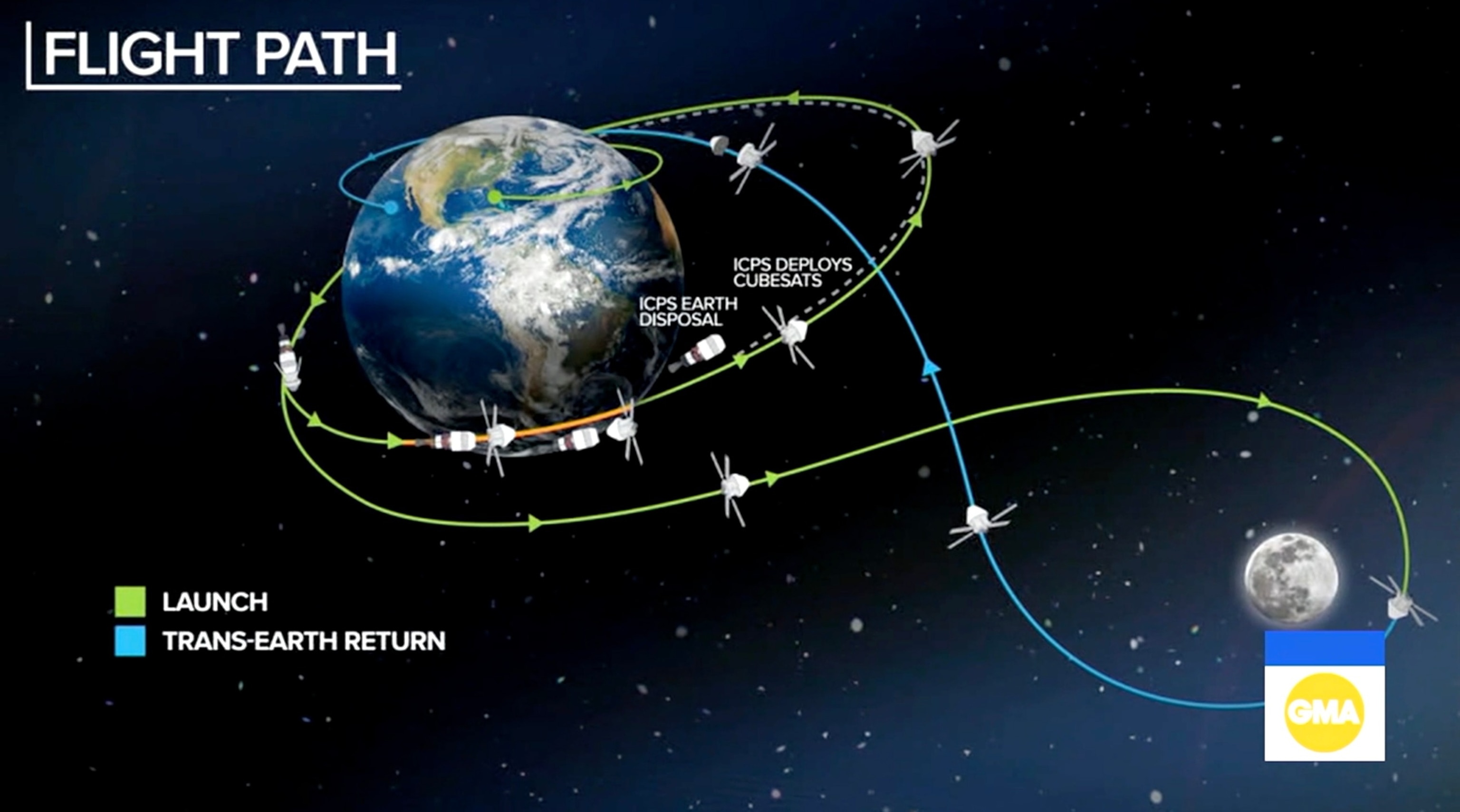
ABC News
Liftoff
When Artemis II lifted off on April 1, the SLS (Space Launch System) rocket needed a massive 8.8 million pounds of thrust just to escape Earth’s gravity and get the astronauts into space.
That power came from two solid rocket boosters and four RS-25 engines, which lifted the rocket into Earth orbit. Once the boosters burned out, they separated and fell into the ocean, leaving the four main engines to carry the rocket the rest of the way into orbit.
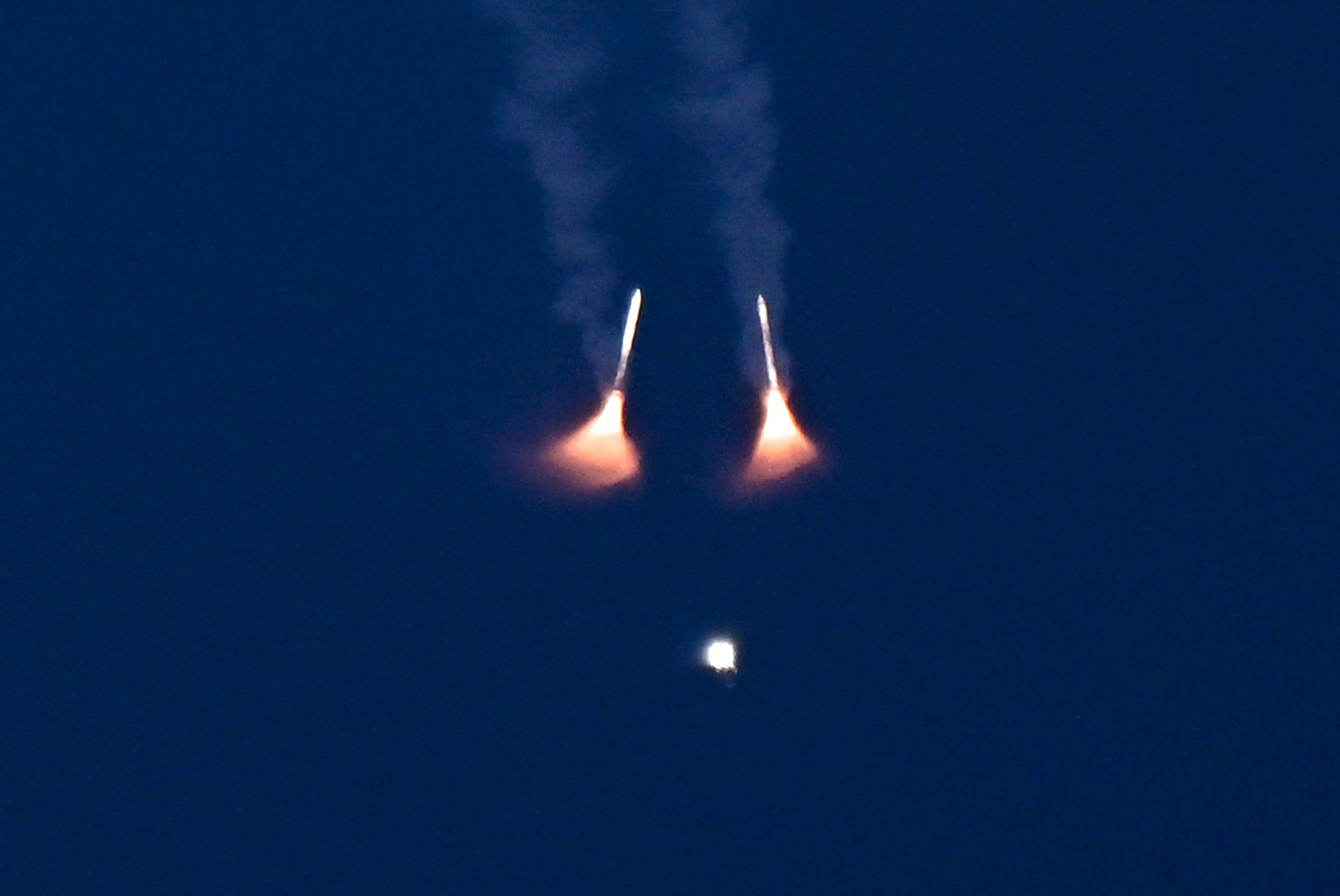
The Space Launch System rocket carrying NASA's Artemis II Orion crew capsule ascends after liftoff, with its solid rocket boosters already detached, from the Kennedy Space Center in Cape Canaveral, Florida, April 1, 2026.
Steve Nesius/Reuters
Earth orbit
The Orion crew module, which the astronauts dubbed "Integrity," began to chart its own course in low Earth orbit about eight minutes into the flight, when the main engines cut off, allowing gravity and inertia to do the rest of the work.
At this point, the focus turned to test-driving Integrity and, if the test is successful, ultimately moving out of Earth’s orbit.
The spacecraft needed to perform two critical burns in order to do this. The two burns are called perigee and apogee burns, which help Orion reach high Earth orbit, where astronauts spend most of their first day in space. Those were completed within the first few hours of the flight.
By then, the interim cryogenic propulsion stage’s job was done, and it was able to separate from Orion, lightening the spacecraft’s load for its lunar flyby.
Popular Reads
The crew then got to test Orion’s ability to be manually driven close to and away from nearby spacecraft. NASA calls this part their proximity operations. The demonstration lasted approximately 70 minutes, the agency said in a press release.
The crew later performed a second perigee burn the morning after launch, using Orion’s main engine, in order to further refine its trajectory toward the moon, NASA said.
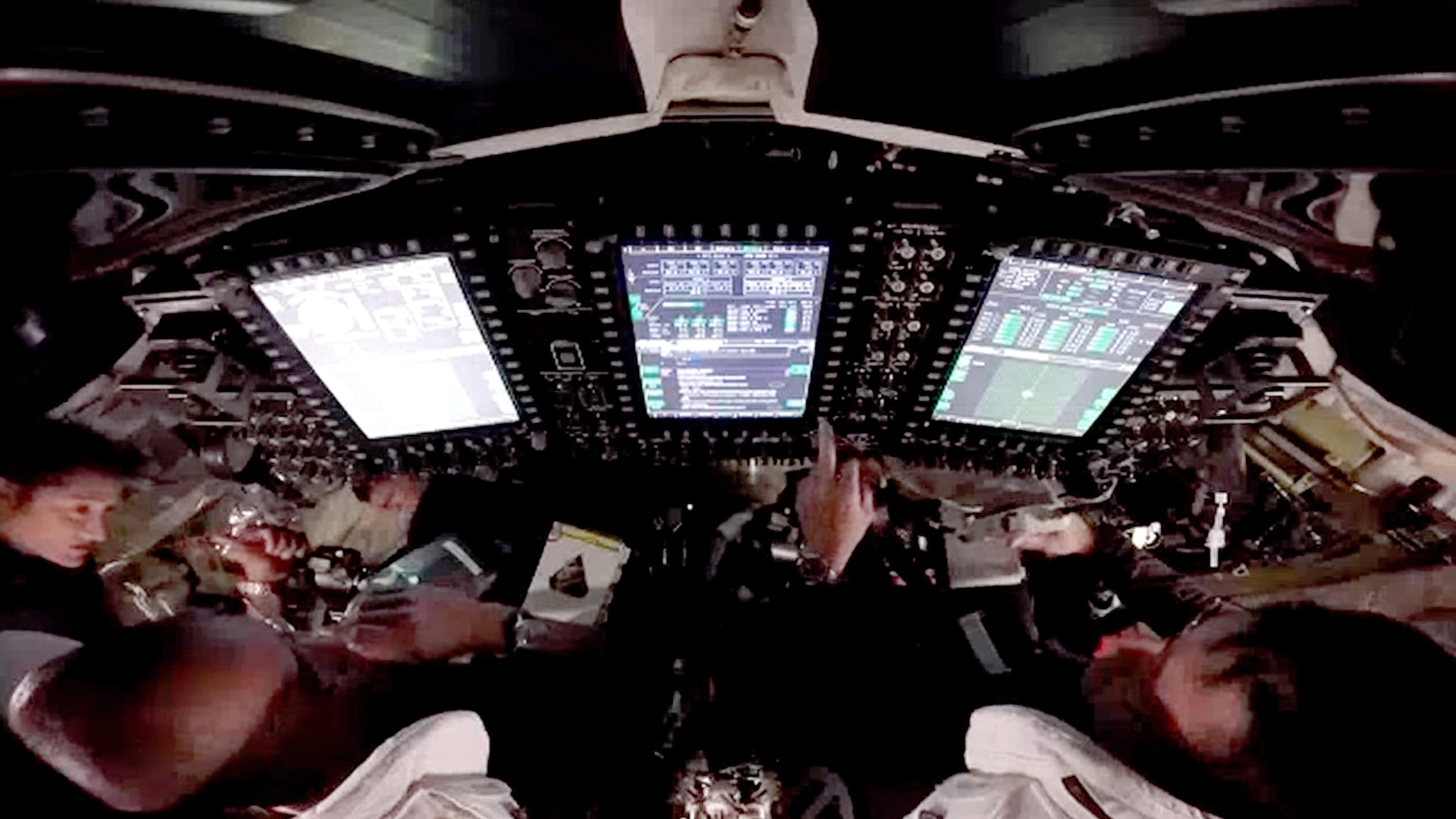
NASA astronauts Christina Koch, Victor Glover and Reid Wiseman and CSA astronaut Jeremy Hansen are seen in the Orion spacecraft, April 2, 2026.
NASA
TLI and the journey ahead
Then comes the big moment: Translunar Injection (TLI), when Integrity leaves Earth orbit for its journey to the moon.
Think back to when you'd sit on a playground swing set. TLI is like your best friend coming to give you a big push, sending you high into the air. For the Orion module, this push is a lot more precise and requires propulsion from the module's main engine to send the astronauts on their way to the far side of the moon.
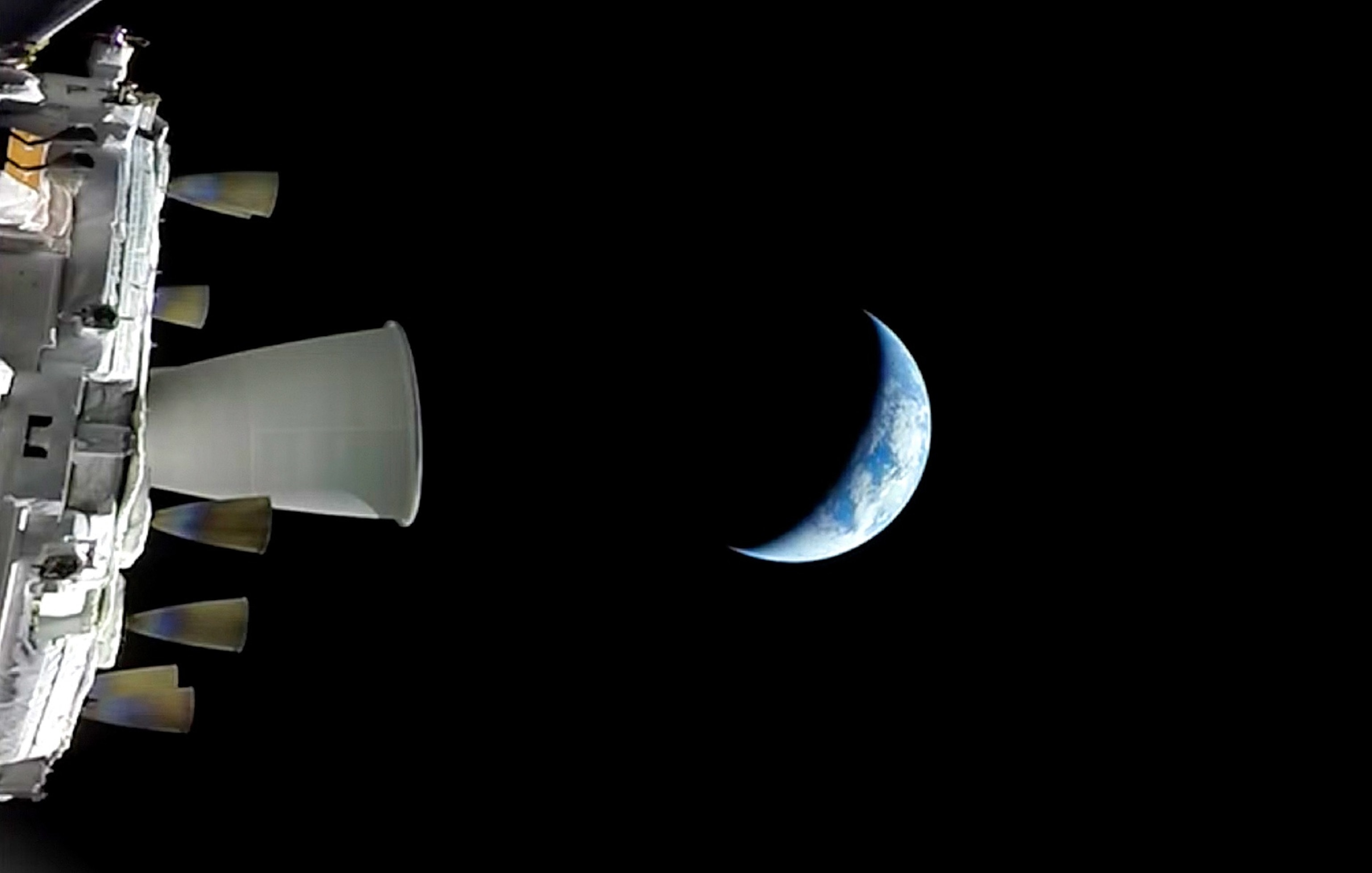
Earth is seen from the Orion spacecraft, April 2, 2026.
NASA
That path to the moon is known as a free return trajectory and it’s just that – a free ride home. The trajectory uses the moon’s gravity to slingshot the spacecraft around the moon and back to Earth in what's called a lunar flyby. It's important to note that this lunar flyby is not the same as lunar orbit – as the name suggests, the spacecraft will fly by the moon without entering orbit around it.
NASA expects Orion to reach the moon by Monday, April 6. The crew’s destination is about 4,600 miles beyond the far side of the moon, where they will catch a glimpse of a view no human has seen since the Apollo era.
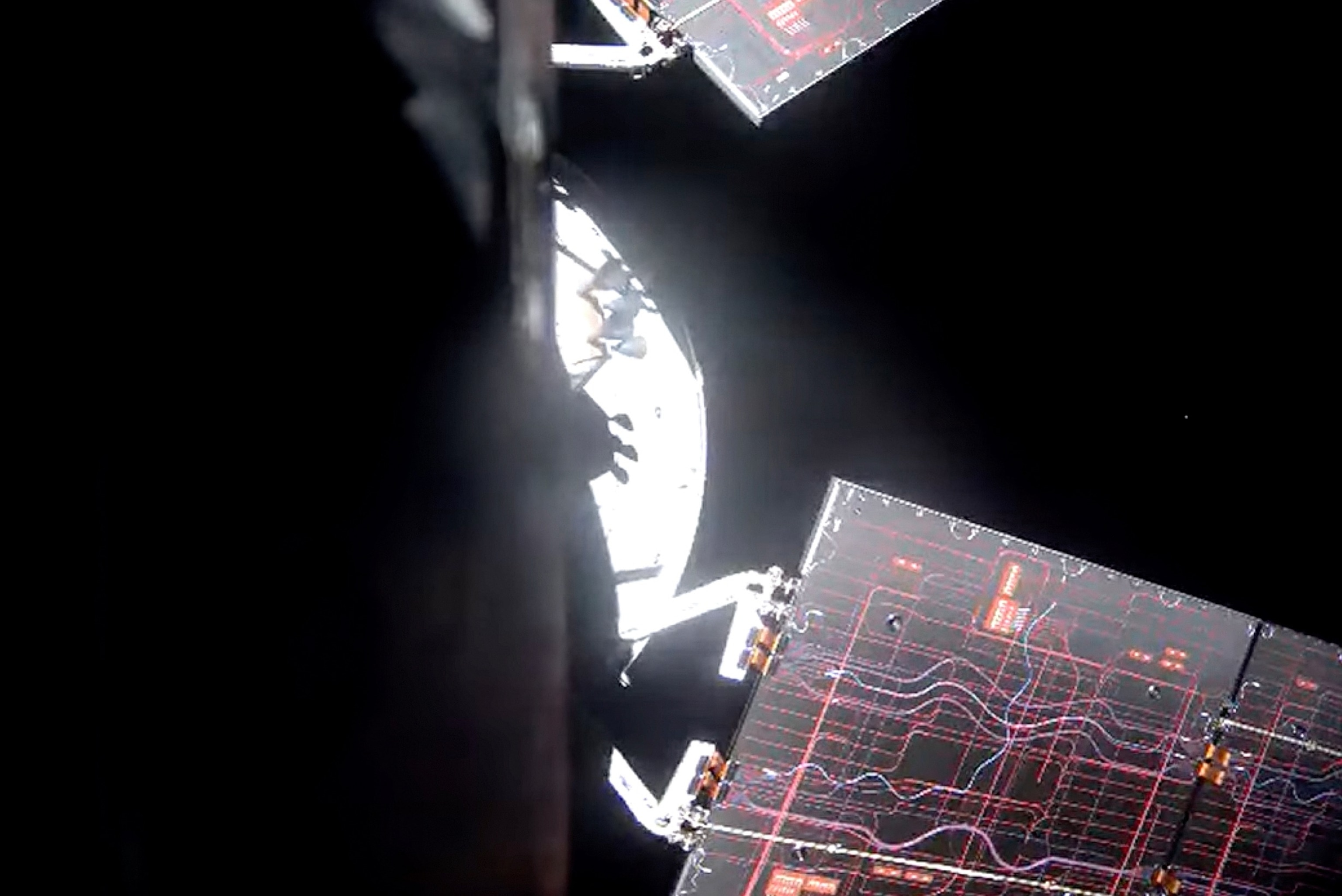
Solar panels are deployed on the Orion spacecraft, April 1, 2026.
NASA
After passing behind the moon, NASA estimates that the crew’s return trip will take about four days. Once all teams give the go-ahead, Integrity will continue along its route, with the help of a few trajectory correction burns along the way to keep the spacecraft precisely on course for splashdown.
As Integrity re-enters Earth’s atmosphere, it will be moving at roughly 25,000 miles per hour. This is when its heat shield is put to the test to help the crew safely land in the Pacific Ocean for recovery by the U.S. Navy, concluding the crew’s historic voyage and marking America'sreturn to the moon.