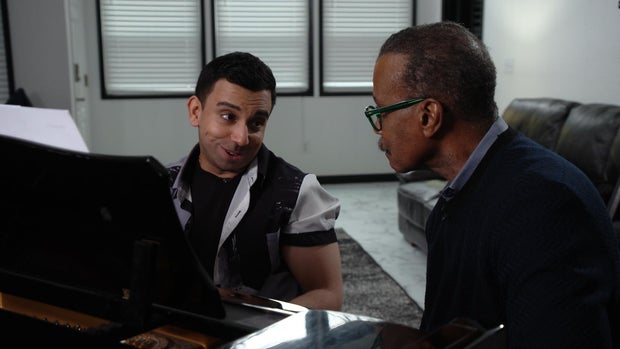
On this "Face the Nation with Margaret Brennan" broadcast, moderated by Nancy Cordes:
- Kevin Hassett, director of White House National Economic Council
- Sen. Chris Van Hollen, Democrat of Maryland
- Reps. Josh Gottheimer , Democrat of Maine, and Mike Lawler, Republican of New York
- Dr. Deborah Birx, former White House coronavirus response coordinator
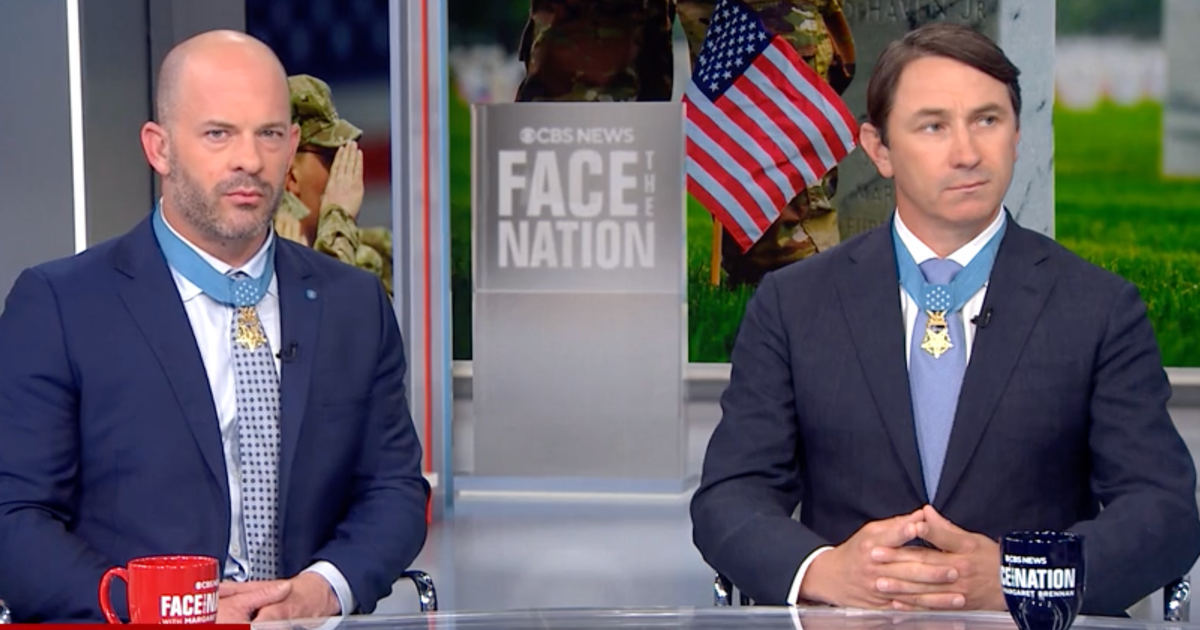
- Lt. Col. William Swenson (Ret.) and Master Sgt. Matthew Williams (Ret.), Medal of Honor recipients
Click here to browse full transcripts from 2026 of "Face the Nation with Margaret Brennan."
NANCY CORDES: I'm Nancy Cordes in Washington.
And this week on Face the Nation: U.S. negotiators appear to be nearing a peace agreement with Iran. We will have the latest.
Sources familiar with the talks tell CBS News that the latest proposal to end the war, which is now in its 13th week, includes a process to reopen the Strait of Hormuz, the unfreezing of some Iranian assets held in foreign banks, and a continuation of negotiations over Iran's nuclear program.
We will talk to the president's top economic adviser, Kevin Hassett, about the impact of the war on the economy. And we will take a closer look at the outrage on both sides of the aisle this week over the creation of a $1.8 billion anti-weaponization payout fund. Maryland Democratic Senator Chris Van Hollen will be with us.
We will also hear from a bipartisan duo working to fight antisemitism in politics, New York Republican Mike Lawler and New Jersey Democrat Josh Gottheimer.
Plus, as the World Health Organization warns that Ebola is spreading rapidly in the Democratic Republic of the Congo, we will talk to Dr. Deborah Birx.
And, finally, a special Memorial Day conversation with two Medal of Honor recipients about the significance of service.
It's all just ahead on Face the Nation.
Good morning, and welcome to Face the Nation. Margaret is off. I'm Nancy Cordes.
On this holiday weekend, President Trump has been hard at work at the White House to iron out an agreement with Iran. When I spoke to the president on Saturday, he sounded upbeat about the potential for a deal and said that he – quote – "wouldn't even be talking about an agreement" if it did not prevent Iran from having a nuclear weapon, adding – quote – "We're getting everything we want. I will only sign a deal where we get everything we want."
But it appears that most of the nuclear decisions would actually be left to the next round of negotiations, and that has some Republicans worried this morning.
We're going to begin with senior foreign correspondent Imtiaz Tyab reporting from Tel Aviv.
(Begin VT)
IMTIAZ TYAB (voice-over): In New Delhi this morning, Secretary of State, Marco Rubio had this to say about Iran:
MARCO RUBIO (U.S. Secretary of State): I will leave it to the president to make further announcements on it. Suffice it to say that some progress has been made.
IMTIAZ TYAB: On Saturday, President Trump held a conference call with leaders of several Arab and Muslim countries, including Saudi Arabia, Qatar, Egypt, Turkey, the UAE, and Pakistan.
In a TRUTH Social post afterwards, the president said: "An agreement has largely been negotiated, subject to finalization between the United States of America and the Islamic Republic of Iran."
Pakistan's army chief, Asim Munir, who's been acting as lead mediator, was in Tehran at the time-, where he met with Iranian leaders as part of attempts to narrow the remaining gaps with Washington.
At a media briefing, Iran's Foreign Ministry spokesman, Esmaeil Baghaei, said, over the past week, the process has moved towards reducing the points of disagreement, but there are still issues that need to be discussed through the mediators.
Those points of disagreement include the fate of the Strait of Hormuz, Iran's frozen assets in foreign banks, and its nuclear program, which includes a large stockpile of nearly bomb-grade highly enriched uranium, which the president says is his red line.
(End VT)
IMTIAZ TYAB: And after his calls with Muslim and Arab leaders last night, President Trump also spoke to Israel's Prime Minister Benjamin Netanyahu.
Now, a senior Israeli political source has told CBS News the P.M. made it clear to the president that Israel would retain the right to take action against what it sees as threats, including in Lebanon, Nancy, amid reports the potential agreement between the U.S. and Iran would also see an end to the war there.
NANCY CORDES: Imtiaz Tyab, thank you so much.
Some key Republican senators have already weighed in on the early reports about the contours of a possible deal.
Senate Armed Services Chair Roger Wicker said putting off nuclear discussions for later would – quote – "be a disaster" and that "everything accomplished by Operation Epic Fury would be for naught."
Senator Ted Cruz of Texas said: "If the result of all that is to be an Iranian regime now receiving billions of dollars, being able to enrich uranium and develop nuclear weapons, then that outcome would be a disastrous mistake."
We turn now to Maryland Democratic Senator Chris Van Hollen.
Senator, thank you so much for being with me.
SENATOR CHRIS VAN HOLLEN (D-Maryland): It's good to be with you, Nancy.
NANCY CORDES: So, I want to stress that all of this is still evolving. We're getting slightly different takes on the terms of the deal from the Americans and the Iranians.
But what do you think about what you have heard so far?
SENATOR CHRIS VAN HOLLEN: Well, Nancy, this war against Iran has been a big blunder from the very start.
The president should have stuck to his campaign pledge of keeping us out of war and focused on bringing down prices. He's done just the opposite. Prices are going up. Interest rates are going up, and we're mired in this war in Iran.
And when you're digging a hole, you should stop digging. That's what this agreement sounds like. It sounds like we will go back to opening the Strait of Hormuz, which, of course, was open before the war started.
I will say, however, it looks like Iran will retain more control over those straits. We also know Iran has an even more hard-line regime in place now, and we're talking about releasing some of Iran's frozen assets.
So, look, my view is, as I said, stop digging.
NANCY CORDES: I want to ask you about something that stirred up a lot of controversy on both sides of the aisle on Capitol Hill this week, the DOJ's new anti-weaponization fund, nearly $1.8 billion set aside for people who say they were treated unfairly by the federal government.
You have been calling it a political slush fund. You are trying to force Republicans to take a vote on placing some guardrails around that fund. What kind of guardrails are you talking about?
SENATOR CHRIS VAN HOLLEN: Well, Nancy, first we should get rid of this political slush fund, $1.8 billion of taxpayer money.
But I have been proposing amendments to prohibit, for example, people who rioted on January 6 and assaulted police officers from being eligible for the fund. People who have been convicted of child molestation, they should not be eligible for the fund. Members of Congress should not be eligible for the fund.
And I would hope all Republicans, including Republican candidates, should come out strongly against this slush fund which the president has set up for these purposes.
NANCY CORDES: You pushed the acting attorney general this week on that question of whether people who attacked police officers would be eligible for the fund. I asked the president about that this week as well. He did not say that those people would be ineligible.
Senate Republicans were very angry about this, and they really gave it to the attorney – acting attorney general behind closed doors this week. Do you think that there is an appetite for trying to get rid of this fund in Congress, and how would that even work?
SENATOR CHRIS VAN HOLLEN: Well, I hope so, Nancy.
I think most Republicans are more upset about the fact that this interrupted their effort to pass this reconciliation bill with another $70 billion of taxpayer funds for ICE. I think that's what upset them the most.
And they decided to leave town because they didn't want to have to vote on these amendments that I have proposed and others have proposed. So we will see how this all turns out. We should get rid of this political slush fund altogether, and we will insist on having these votes when we get back.
NANCY CORDES: I have been told by a senior administration official that there are now some urgent efforts under way to address the concerns that Republicans have raised about this fund.
But they continue to insist they have got the right to do this and that, in fact, they already have the ability to make these payouts, and, if anything, they're making the process more transparent by coming up with rules, by appointing commissioners, and all the rest.
What do you think of that argument?
SENATOR CHRIS VAN HOLLEN: Well, that's absurd, and this is really corrupt from the start.
I mean, this is essentially President Trump negotiating with President Trump through the acting attorney general, who was Trump's former personal lawyer. They have set it up so they have complete control over the five members of this commission that can be selected. President Trump can fire any of them whenever he wants.
And so this is completely under their control, a slush fund. And they have not committed, Nancy, to being completely transparent. The acting attorney general refused to say that they would disclose the names of all the people who receive these taxpayer funds.
So let's be clear. This is a corrupt deal. And, in the process, the president, of course, got a complete get-out-of-free – get-out-of-jail- free card with respect to any taxes that he has due and owing, another corrupt part of this deal.
NANCY CORDES: I want to ask you about a case that you have been heavily involved in. And there was a big development this week. A judge threw out the federal human smuggling charges against Kilmar Abrego Garcia of your home state, Maryland.
You visited him in El Salvador after he was wrongfully deported to that country, placed in the Supermax prison CECOT. The judge said that DOJ's prosecution of him was vindictive, and DOJ now says it plans to appeal.
Have you spoken to him or his family? How are they feeling about this decision?
SENATOR CHRIS VAN HOLLEN: Nancy, I have spoken to him and his wife, Jennifer, and they're, of course, pleased that the court system have applied the law.
This was absolutely a vindictive prosecution. The judge called it essentially an abuse of power, because the Trump administration brought these new charges against him because he decided to exercise his due process and constitutional rights.
They had admitted that they had wrongfully disappeared him to El Salvador, and he contested that. And, of course, he is now back. They're still trying to deport him. But he filed his claims under the Constitution.
And so this case is not about Kilmar Abrego Garcia alone. This is really about the rights of each and every one of us. And when the Trump administration decided to vindictive – vindictively prosecute him for that, they were further threatening the rights of all of us.
NANCY CORDES: We have got about a minute left, but I want to ask you about this election autopsy that was finally released by the Democratic National Committee this week.
Do you feel like you got any answers from that autopsy on why the Democrats lost in 2024? And do you believe that the head of the DNC should resign over this?
SENATOR CHRIS VAN HOLLEN: Well, Nancy, this is a very shoddy piece of work. It's an incomplete piece of work. And I can understand why Ken Martin was reluctant to release it earlier.
But, as he has said, he owns this problem. He should have ripped the Band- Aid off earlier and put it out. No, we're six months from a very important election, and we should not be changing horses at this time.
I will say that the overall thrust of the report in indicates that we should not just go back to the pre-Trump status quo. And I have said from the beginning it was a failure, obviously, of the Democratic Party to lose to someone like Donald Trump a second time.
We need to be clear to the American people that we understand their financial and economic pain and their daily struggles and that we're going to do something about it, we're going to fight for them and we're going to fight against the special interests, very powerful special interests, who try to stack the deck against them.
NANCY CORDES: Right.
Senator Chris Van Hollen of Maryland, thank you so much for joining us this morning. I appreciate it.
And we will be right back.
(ANNOUNCEMENTS)
NANCY CORDES: We go now to a bipartisan pair of representatives.
Josh Gottheimer is a Democrat from New Jersey and Mike Lawler is a Republican from New York.
Congressmen, welcome. Thank you for joining us.
REPRESENTATIVE JOSH GOTTHEIMER (D-New Jersey): Thanks for having us.
REPRESENTATIVE MIKE LAWLER (R-New York): Thanks for having us.
NANCY CORDES: Sure.
Congressman Lawler, I want to start with you and get your take on this memorandum of understanding that appears to be taking shape between the U.S. and Iran. We've already seen some blowback from some of your fellow Republicans. South Carolina Senator Lindsey Graham said, if the reports on the deal are accurate – quote – "It makes one wonder why the war started to begin with."
Congressman, do you share his view?
REPRESENTATIVE MIKE LAWLER: No.
And I think it's important that we actually get all of the details, number one. Number two, if you look at what took place during the kinetic activity, what did they do? They focused on the ballistic missiles program, the drone capabilities, the naval fleet, and seizing control of Iran's airspace.
They were able to do that. Iran retaliated with a blockade in the Strait of Hormuz, and President Trump blockaded that, which caused great harm to Iran's economy, stopped the flow of oil to China. And so there's been immense pressure for everybody to reach a deal.
But the bottom line is, the objective is to ensure that Iran does not possess a nuclear weapon. And that is what President Trump has been clear and consistent on from the very beginning. And so I think it is imperative, before everybody rush to, you know, get to the microphone, that they actually understand the terms of the agreement that is being proposed, and specifically with respect to the enriched uranium.
NANCY CORDES: So, you like what you're hearing?
REPRESENTATIVE MIKE LAWLER: Look, I have been in touch with the administration. I serve as chair of the Middle East and North Africa Subcommittee on the Foreign Affairs Committee.
I think, on the whole, what the administration has been able to do for the first time in 47 years has forced the remnants of this regime into a negotiation, a real negotiation. The fact is, the JCPOA from over a decade ago was not a negotiation. It put Iran on the glide path to a nuclear bomb. We are trying to stop that, and the president took decisive action to do it.
NANCY CORDES: Congressman Gottheimer, you've been pushing to get a war powers resolution passed. You're getting closer to doing it. If the nuclear decisions get pushed off, but the Strait of Hormuz does get reopened more quickly, is that a win for American taxpayers?
REPRESENTATIVE JOSH GOTTHEIMER: Well, I think the good news here – and, as Mike said, we're still getting details.
The good news, is the straits will be back open, if that's true, and that will mean gas prices will go down for Americans, and that's good news.
The news that's bad news, in my opinion, is – and this is where it's unclear – is, the initial objectives had to do with enriched uranium and making sure that, from a nuclear capability, Iran, which I think is a clear adversary to the United States under banners of "Death to America," and I believe the Iranian regime should be crushed.
But part of that is making sure that we diminish their nuclear capabilities, so they can't make the jump to having a nuclear weapon, that we significantly diminish their ballistic military capabilities, their missile capabilities, and, of course, their drone activity, and then with all the dollars that have gone historically to terror programs and their proxy programs, Hamas, Hezbollah, Palestinian Islamic Jihad.
Those are all questions that are out there, and it's unclear if we've made any substantial progress there.
And I think, you know, if, at the end, to the point of Senator Graham, if you look back at this and say, OK, we've made huge investments, and we've had a clear goal along, which is to crush Iran and reduce their ballistic and missile program and their nuclear program, their terror program, and all we got was actually something that was never on the table, a reopening of the Straits of Hormuz, that, to me, in the end, will not be reaching the goals initially set forth here.
And so that's – that's the big question, if we've just really gotten nothing and kind of run in place.
NANCY CORDES: Congressman Lawler, the president made a high-profile visit to your district on Friday. He campaigned for you because you represent one of just three Republican-held districts in the U.S. that Kamala Harris won in 2024.
How are you explaining to your constituents this new settlement that prevents the IRS from auditing any Trump family documents prior to this year?
REPRESENTATIVE MIKE LAWLER: Well, I think, when it comes to any agreements that the president has made with the IRS, from my vantage point, you know, I think, looking back at what the Biden administration did, they certainly weaponized the government and were targeting the president.
And I think he obviously had claims that he brought against the government as a result of that. From the standpoint of the president, you know, I was happy to welcome him to my district, just as I did Joe Biden when he was president. Joe Biden came three years ago to my district, and I showed up.
President Trump was here. We had over 5,000 people show up in my district to hear directly from the president on the issues most acutely impacting them, including my ability to deliver on lifting the cap on SALT.
The president also announced bestowing the Presidential Medal of Freedom on one of my constituents who died on 9/11, Welles Crowther, the man in the red bandana who saved 18 lives.
And we also heard from the Gorman family. Their daughter Sheridan Gorman was brutally murdered by an illegal immigrant who was allowed into this country under Joe Biden's open border policies, and then arrested in Chicago, released under cashless bail and disastrous pro-criminal policies in the city of Chicago, and murdered this 18-year-old girl, who had her whole life ahead of her.
NANCY CORDES: Congressman…
REPRESENTATIVE MIKE LAWLER: And so hearing from her family was paramount. So, I was happy to have the president there on Friday.
NANCY CORDES: Understood.
I do want to get to the issue of antisemitism, because we wanted to have you both on together because you are working together on ways to address the rise in antisemitism in the U.S.
Congressman Gottheimer, I understand the value in lawmakers drawing attention to some of the really vile incidents that we have seen in this country lately, the stabbing of a Jewish man on the streets of New York, the shooting at the Capitol Jewish Museum here in Washington, but what can Congress realistically do about this problem?
REPRESENTATIVE JOSH GOTTHEIMER: Well, we know, since October 7 and the Hamas terrorist attacks, antisemitic incidents in the country are up 70 percent.
Mike and I, both our states have some of the top anti – numbers of antisemitic incidents in the entire country. It's totally unacceptable. And what's happening now is, it's far too often in our politics on both sides, right, whether it's Hasan Piker, who's a streamer on the left or Candace Owens on the right, who are campaigning with candidates around the country, actually encouraging some of the most vile antisemitic language, like Hasan Piker, who calls Jews pig dogs, Candace Owens, who denies the Holocaust.
We've got candidates on both sides who've embraced them, who've made insane comments, like the woman in Texas this past week, a Democratic candidate, who said that Jews should be in camps. You've got Bilzerian, Bilzerian, Florida, who said we should exterminate Jews.
None of this should be acceptable. And – and Mike and I, whether it's through the Antisemitism Awareness Act, which we passed out of the House last Congress on defining antisemitism, and introduced again this Congress, or both of us condemning Piker and Owens in legislation, both of us believe deeply that we need to stand up to this.
And Mike's been very outspoken, as have others. And our leadership on both sides needs to make it very clear time and again that – that you don't stand with these – with people like Owens and Piker, and they're not welcome in our districts, and none of this language in – is acceptable either. I think it's very important.
NANCY CORDES: Congressman Lawler, why do you believe that fringe candidates like the one that Congressman Gottheimer just mentioned sense that there is a market for that sort of hate to begin with? Is there some kind of permission structure that has been created in both of your parties?
REPRESENTATIVE MIKE LAWLER: Well, I don't think there's any question that antisemitism has been condoned by folks across the political aisle.
And, from my vantage point, it is something that all of us have a responsibility to push back against regardless of party. These candidates are coming forward. They feel it is OK to blame Jews for whatever ills there are in the world.
Obviously, you know, I experienced just last week Rand Paul's son screaming at me in a bar because he thought I was Jewish, when, in fact, I'm Irish Italian Catholic. And regardless of whether I was or I wasn't Jewish, the idea…
NANCY CORDES: He has apologized for that, correct?
REPRESENTATIVE MIKE LAWLER: … that people feel it is OK to engage in that.
He did, ultimately. But the idea that people feel it's OK to engage in that type of conduct is shameful. And I think what Josh and I are trying to do, in putting this resolution forward, is to say, enough, and to say to both parties, we have to police our own. We cannot allow this. We cannot support candidates who engage in rank, vile antisemitism.
NANCY CORDES: Right.
REPRESENTATIVE MIKE LAWLER: You know, the Jewish population is about 2 percent of the United States, and, meanwhile, it's over 50 percent of the hate crimes that are experienced.
NANCY CORDES: Yes.
REPRESENTATIVE MIKE LAWLER: Something's got to give.
NANCY CORDES: Got it.
Congressman Lawler, Congressman Gottheimer, we appreciate both of you coming on. Thank you so much.
And we'll be right back.
(ANNOUNCEMENTS)
NANCY CORDES: We will be right back with a lot more Face the Nation. Stay with us.
(ANNOUNCEMENTS)
NANCY CORDES: Welcome back to Face the Nation.
We turn now to the Director of the National Economic Council, Kevin Hassett, who joins us from the White House North Lawn.
Kevin, thank you so much for being with me.
KEVIN HASSETT (Director, National Economic Council): Great to be here. Thank you.
NANCY CORDES: I want to start by getting your take on the state of the economy, because a kind of confusing picture emerged this week. The Dow Jones hit an all-time high, and yet consumer sentiment hit an all-time low. Mortgage rates hit a nine-month peak. Inflation is up.
Earnings at big box stores like Walmart are up, in part because people from across the income spectrum are being drawn to low prices right now. Are there storm clouds gathering in the economy?
KEVIN HASSETT: No, I don't think there are storm clouds gathering at all.
And, in fact, let's start with the consumer sentiment number, because that was a number that was very striking to me and to you, I know, when it came in very, very low. And what we did is, we went to their Web site and we looked that they actually break it out by political affiliation, so they have it for Democrats, independents, and Republicans.
And if you look at it, consumer sentiment at the sort of peak of the Biden inflation, the stagflation was way above 100, and it's dropped all the way down into the low 30s now, about the lowest it's ever been for Democrats. But, for Republicans, it's held about steady.
And, if you look at it, independents and Democrats are really highly correlated, which suggests to us that their sample is Democrats. And so if you go to consumer confidence, which is something that's actually, I think, a more scientific survey, the consumer confidence is consistent with all the other positive numbers we're seeing right now.
NANCY CORDES: But you don't dispute that the war has taken a toll on parts of the economy?
KEVIN HASSETT: Right now, consumer confidence is the highest it's been in – since the beginning of the year, and so you don't see a toll of the war on consumer confidence, which is the Conference Board survey.
But, again, GDPNow, the Atlanta Fed's estimate of second-quarter GDP, is north of 4 percent. We've got initial claims for unemployment insurance as low as they've been since the '60s. And so there's so much going on that is really, I think, surprising people that think that the disruption from the Middle East is going to harm the economy.
It's just not there in the data, except for the consumer sentiment data. But I actually think that we should stop calling it consumer sentiment and start calling it political sentiment, because the variables really are – it's really a political variable, and not an economic variable.
NANCY CORDES: The data on gas prices is pretty undeniable.
Memorial Day weekend, gas prices are at a four-year high. AAA says they'll remain elevated throughout the summer, at least. Last month, you said that high gas prices would be a temporary phenomenon. Did the White House paint too rosy a picture of the impact that this war would have by emphasizing that this was going to be a four-to-six-week excursion?
KEVIN HASSETT: Well, I think the four to six week was an accurate description of like, when, the sort of active kinetic events were going to happen.
Right now, I will let the president decide on whether he thinks the deal is ready to go this week or not. But the bottom line is, once the straits are open, then the tankers are going to go back and they're going to refill the refineries almost right away.
A tanker goes about 300 nautical miles a day, and so the places like India and Pakistan, which are close to the straits, are going to get their oil and then turn it into refined product right away. Singapore, which is one of the places where jet fuel prices are the highest, is going to get its stuff just about right away.
But, if you're down in New Zealand, it'll take a little bit longer. But, really, like between a month and two months, we expect everybody to have all the oil they need at every refinery on Earth.
NANCY CORDES: Well, we know that things will get better once the strait reopens. The question is, when will it reopen?
KEVIN HASSETT: Right. Well, that's – that's something for the president and Marco Rubio and the Iranians to work out.
NANCY CORDES: I realize that, as director of the White House Economic Council, this $1.8 billion anti-weaponization fund is not part of your portfolio.
KEVIN HASSETT: Sure.
NANCY CORDES: But the backlash to that fund did derail a bill this week that included funding for ICE and the CBP. And government funding is part of your portfolio.
So, what is the administration doing, if anything, to try to cool members of the president's own party down on this issue? They seemed really angry and really blindsided.
KEVIN HASSETT: Well, I don't know if across the board they were, but there's certainly some people who felt that way.
And – and our head of leg affairs, James Braid, is a real professional. He's been talking to everybody. He's been arranging for phone calls with those of us at the White House that want to talk to people and hear people's concerns.
But the bottom line is that, you know, we expect the progress that the president wants to see in Congress to happen. Congress has delivered over and over under the leadership of Mike Johnson. And so I understand that, you know, there's something that was a little bit different this week than maybe you expected, but I don't expect that to go on.
And one thing we've seen from primaries is that people that buck the president generally regret it politically.
NANCY CORDES: "The Wall Street Journal" editorial board really took a swipe at the president over that fund, over the ballroom on Saturday.
They said – quote – "Republicans don't want to say this publicly, but, privately, they do. President Trump's personal political obsessions are hurting his presidency, hurting the chances for further foreign policy gains, and putting control of the House and Senate in jeopardy."
Does the president realize that he is putting Republicans in a tough spot by forcing them to take votes on things that are unpopular, like the fund, like the ballroom, like the war, in a midterm election year?
KEVIN HASSETT: Look, I respect "The Wall Street Journal" very much. I saw Paul Gigot at the Kevin Warsh signing-in on – just on Friday, but the bottom line is, the president believes that the ballroom is something that should have been there for a long time, and he's using his own money and the money of donors to make it so that the taxpayers don't have to pay for that ballroom.
And, as far as weaponization, I don't think that you or I would disagree…
NANCY CORDES: Well, they would have to pay a billion dollars, correct?
KEVIN HASSETT: No, it's not for the ballroom. That's for securing the entire White House.
And, my goodness, to argue about that after we were all here yesterday – I actually wasn't here. I was at my home a couple blocks away when the shooting happened. Of course, we've got to make the White House more secure.
But on the $1.8 billion fund for weaponization, I don't think you would disagree, right? The previous administration and the Obama administration weaponized government against President Trump.
And what he wants to do is make sure that never happens again and compensate the people who were the targets of the destruction of their lives. What they would do is, they would call people in to Jack Smith's office, and then bury them in subpoena requests and bankrupt them. And that's something that should never happen again, never.
And I think that I – I doubt that there's anyone that disagrees with that.
NANCY CORDES: Kevin Hassett, the director of the National Economic Council, appreciate your time this morning.
KEVIN HASSETT: Thank you. Same here.
NANCY CORDES: And we'll be right back.
(ANNOUNCEMENTS)
NANCY CORDES: We turn now to the escalating Ebola outbreak in the Democratic Republic of the Congo.
Joining us to discuss is the former White House coronavirus response coordinator Dr. Deborah Birx, who also previously helped coordinate the international response to the 2014 Ebola outbreak when she was global AIDS coordinator.
Dr. Birx, thank you so much for being with us.
DR. DEBORAH BIRX (Former White House Coronavirus Response Coordinator): Good to be with you, Nancy.
NANCY CORDES : Doctor, the White House – the WHO, rather, says there are now almost 750 suspected cases in the Congo, around the Congo, and nearly 200 deaths. How does the severity of this situation compare to previous outbreaks?
DR. DEBORAH BIRX: Well, the problem with this particular outbreak is there was probably two, three, or four cycles of infection before it was even reported.
And so a lot of the numbers you're seeing and the rapid rise of the numbers is because it went undetected and underreported for probably three or four weeks. That resulted in a lot of case reporting all at once. And so I can't really tell you what the slope of new cases are, which is really the important thing when you're following an acute infectious disease.
But just to make it very clear to your audience, the people we are seeing today that are cases were probably infected two weeks ago. And so I think that's what makes us all concerned is, we're looking at this – at this virus and this outbreak with really old data.
NANCY CORDES: I want to get to that delay in reporting the outbreak in a moment.
But, first, we saw this week that a plane from Paris to Detroit had to be diverted to Montreal after a person from the Congo was mistakenly allowed to board. What do Americans need to know about the transition of this disease and the risk here at home? I think people are worried.
DR. DEBORAH BIRX: Well, when you see this level of outbreak, ever since COVID, I can understand why people are worried.
But, remember, DRC has had 17 or 18 of these outbreaks in the last 20, 30 years. So this is actually fairly commonplace, although this is a large one.
I think we learned from COVID how to be much more proactive about preventing the virus getting to the country. Ever since we had those cases almost a decade ago, what we did is, we really strengthened hospitals. Now we have biocontainer facilities in multiple hospitals, so we're prepared if it ever happens or someone enters the country.
But it's important that we are proactive, like they have been. And when you have a travel ban, you have to really enforce it. And it's what they did when they diverted the plane.
NANCY CORDES: Is this travel ban the right answer, people from the Congo…
DR. DEBORAH BIRX: The travel ban – yes. Yes.
NANCY CORDES: … from a couple other countries not being able to come into the U.S., even green card holders, if they've been in that area over the past 21 days or so?
DR. DEBORAH BIRX: You know, I – it's part of a comprehensive response, which it is, and I don't think it's getting that much coverage, but within four days, the U.S. sent a DART team.
A lot of the USAID people who are no longer in the USAID building are now in the State Department and have been part of Ebola responses, the 2014 and 2018 response. They're already on the ground. There's a CDC group that was in Kinshasa, is permanently in Kinshasa. They're responding.
And so, when it's part of a comprehensive funding response, yes, not as a - - an only one solution.
NANCY CORDES: As you know, in the past year-and-a-half, the Trump administration has largely dismantled USAID. It has withdrawn from the World Health Organization. It cut funding to the Congo and Uganda.
Do you think that those moves contributed to the delay in reporting this outbreak? And are they contributing to the lack of supplies in dealing with the outbreak in the Congo?
DR. DEBORAH BIRX: Well, when I look what the administration has done recently, I think they put $50 million to $100 million out there immediately, and sent people, that's part of the response.
I think the bigger question to me is, a lot of us in the global community invested extensively in creating the African CDC for this very reason, for this very response. Hundreds of millions of dollars went into building laboratory capacity in the DRC, at the African CDC. And, for some reason, that failed us.
And so what we need to do is figure out, why didn't we detect this earlier? Why didn't the institutions that we all stood up as a global community effectively control this outbreak early, so that it didn't spread as far and wide as it has within the DRC?
I understand it's a conflict area, but we have to do better. We owe it to the people in the DRC.
NANCY CORDES: I hear what you're saying about the fact that the money is now flowing from the U.S. to the region, but we talk to aid workers in the region as well who said that a lot of local programs were terminated after USAID was dismantled, programs aimed at Ebola preparedness and response, and so they just don't have the same capacity as they did before.
DR. DEBORAH BIRX: I think it's a great question, and we need to really look at that.
I know CDC's Global Health Security program was retained, and a lot of that funding retained. I know we had people in Kinshasa as part of the CDC. If you look at the Uganda funding – now, I'm looking at it from the HIV side, which really built a lot of the laboratory capacity. This year, they're getting over $400 million, so maybe there was a 5 percent cut.
But I think the American people were thinking that these programs had been slashed. If you look at the MOUs of the agreements that the U.S. government have been made, I have actually been reassured by the numbers that are there on paper.
NANCY CORDES: The U.S. right now does not have a confirmed head of the CDC. It does not have a confirmed head of the FDA, doesn't have a confirmed surgeon general.
Is the U.S. prepared to deal with an outbreak of Ebola or any other infectious disease if it comes to our shores?
DR. DEBORAH BIRX: I think it's a great question.
And watching how this plays out will be very important. And I'm watching that. They've already created an interagency Ebola response task force. And just to reassure the American public, I was in the federal government for 40-plus years and in the military for 29.
There's a deep bench. And so, yes, it's important to have the leads of all of these agencies. I think people have been nominated to at least the CDC.So I think that's very important. But we do have a deep bench in many of these agencies. And I really – I know them. They're great people.
I think this interagency response is already putting assets, people, and money on the ground. And I think what we do need – I just keep coming back to African CDC, because that was supposed to be our early mobilizer of protective gear, of testing, of community work. And we just need to figure out how to strengthen that even further.
NANCY CORDES: Got it.
Dr. Deborah Birx, thanks so much for being with us. Thanks for the context. We appreciate it.
And we'll be back in a moment.
(ANNOUNCEMENTS)
NANCY CORDES: To commemorate Memorial Day as we approach our country's 250th birthday, Margaret sat down with two Medal of Honor recipients, retired Army Lieutenant Colonel William Swenson and retired Army Command Sergeant Major Matt Williams.
Here's part of their conversation.
(Begin VT)
MARGARET BRENNAN: Will, when President Obama presented you the Medal of Honor, he said:
BARACK OBAMA (Former President of the United States): Americans like Will remind us of what our country can be at its best, a nation of citizens who look out for one another, who meet our obligations to one another, not just when it's easy, but also when it's hard.
MARGARET BRENNAN: Is it a burden to carry expectations like that with you when you enter private life?
LT. COL. WILLIAM SWENSON (RET.) (Medal of Honor Recipient): I think we have to remember that the crucible of war is unfair, and it does bring out both the worst of us and the best of us.
In moments of great risk to our own lives, we do things that are inexplicable, and we see things that are almost at the level of miracles. People are coming together as a team to do things that ultimately flies in the face of good decision-making.
But, ultimately, what they're doing is fighting on behalf of each other and on behalf of their country. And when I recognize that I received individual accolades from the president, one of the things that we have to remember, specifically as Medal of Honor recipients, is that we're the ambassadors to other people's stories.
We're ambassadors to those whose stories were not told. We're ambassadors to those who were with us on the battlefield, Johnson, Johnson, Kenefick, Layton, and Westbrook, and they didn't come home. Their stories are part of our story.
We wear this medal as a representation of service, not as a representation of ourselves, and that is a weight that we as recipients of this award have to remember is, our responsibility is to continue telling the stories, not just of us, but of everyone we served with and everyone who will serve.
MARGARET BRENNAN: That feels heavy. It feels like you will always be part of public service after going through something like this.
LT. COL. WILLIAM SWENSON (RET.): I would say, as Medal of Honor recipients, we are a very fair representation of America. We're a snapshot of this country. We come from towns, cities, all walks of life, different political views.
And, ultimately, we are a very democratic representation of the values of this country. But, as recipients of this award, we have to take those backgrounds, some humble, some not, and, with that, continue to try to lead lives that are emblematic of what this award represents.
MARGARET BRENNAN: And I understand both of you are continuing to try to – to help and to serve, particularly with veterans.
Matt, President Trump said of you:
DONALD TRUMP (President of the United States): We salute your unyielding service, your unbreakable resolve and your untiring devotion to our great nation.
MARGARET BRENNAN: Do you think of those words as a – as a burden or as an assignment for the rest of your life? How do you think of it?
COMMAND SGT. MAJ. MATT WILLIAMS (RET.) (Medal of Honor Recipient): Yes.
I think it's probably a little of both, but I will kind of frame it a bit differently. You know, to me, it's a privilege, because not everybody gets the opportunity to put this medal on.
Well over 50 percent of the medals that have been awarded have been awarded posthumously. To – so to be able to stand there in front of the nation, in front of your family, in front of your peers, in front of your team, and have the president of the United States of America present an award to you that you can never feel like you actually ever earned, because it's just impossible, you know, is extremely heavy.
And it is a burden, at the end of the day. And, you know, one of our – my friends and fellow recipients, you know, Kyle Carpenter says it all the time. He calls it a beautiful burden. And I agree with him, to a point, but I also – I also think it's a privilege, at the end of the day.
It's a privilege to be able to continue to serve, serve our country, serve our people, serve our fellow recipients, and serve the fellow service members that are out there across the globe today.
MARGARET BRENNAN: Another key anniversary is Afghanistan. There has been so much scrutiny in this country over the war that ended five years ago this August. Hard to believe.
COMMAND SGT. MAJ. MATT WILLIAMS (RET.): Yes.
MARGARET BRENNAN: America's longest war.
I wonder how that sits with you, since you both served on that battlefield. What do you think of those who sacrificed in that conflict? It's spoken about in so many different, heated ways. But, for you, when you think of that war, how do you make sense of America's experience?
LT. COL. WILLIAM SWENSON (RET.): As military service members, we were asked by our country to go serve overseas on behalf of the defense of the nation. It's as simple as that. We did our jobs. We did our jobs honorably, and we did our jobs to the measure that we left some of ours behind.
There was loss of life because we believed in the mission. And, ultimately, as service members, that's what we do. We serve to the best of our ability when our nation calls us to serve.
MARGARET BRENNAN: Is it difficult to hear people talk about the war?
LT. COL. WILLIAM SWENSON (RET.): Our war is part of our history. Our service overseas is part of our history. If we don't tell these stories, we as a nation don't know how to always improve.
We are an imperfect nation that's always trying to improve, and it's through our history as a lens that we look forward on how to do better next time.
MARGARET BRENNAN: How do you feel about conversation about America's longest war? I mean, is it painful?
COMMAND SGT. MAJ. MATT WILLIAMS (RET.): You know, I think we have to talk about it. You know, we have to learn from it.
You know, you can – you can love it or hate it or agree with or disagree with it, and that's all fine, and that's your prerogative. And that's – that's part of living in a free country. You know, that's why we did what we did, so that you can disagree or like or hate or whatever. It doesn't matter.
You know, I think about it a little bit differently. You know, I'm not – I'm not sad about it. I know what I did over there. I know what I saw people do over there. My experiences have grow – made me grow as a husband, a father, as a man.
And I think all those things are extremely important. I know what I served for. I know what I did. I know what we accomplished together as a team and as an ODA and as a Special Forces community writ large. And I'm very proud of that. I'm very proud of my service to Afghanistan.
MARGARET BRENNAN: We are coming up on this 250th anniversary of the American experience. What specifically makes you optimistic? Because this country, at times, can feel dark, these days. There's a lot of darkness. What makes you feel optimistic?
LT. COL. WILLIAM SWENSON (RET.): Well, ultimately, because we're in Washington, D.C., and everything revolves around politics, we have to remember that politics aren't everything.
American lives continue on. Children are born. Children go to school. Lives are achieved. Dreams are achieved. This country is a great place. It's not politics. It's not just what's the news bites coming off of media. Ultimately, we continue forward as a country, continually imperfect, continually evolving forward, always trying to achieve a more perfect union.
That's what's important to remember, what we can achieve aspirationally. No other place in history, time or on this planet have ever gotten to where we are today. We need to be proud of that, and we need to remember that is what we stay focused on, what we can be.
MARGARET BRENNAN: What we can be, and the promise of it.
What makes you optimistic?
COMMAND SGT. MAJ. MATT WILLIAMS (RET.): It's so important to remember who we are as a country and take an opportunity to celebrate that, and think about all the – the challenges that we've overcome, how far we've actually come.
You know, I think, if you – if you frame it that way, you think very deeply about our trials and tribulations from beginning to today, we've made tremendous strides. Our country is – you know, we're a super – global superpower. Our economy is doing well. All those things are great.
And – and take politics aside, out of this whole conversation. Be grateful for what you've got and the great – the opportunity that was provided for you. And, if you do that, I don't see how you can't be optimistic about our future.
MARGARET BRENNAN: Well, thank you. Thank you both, and thank you for your service.
COMMAND SGT. MAJ. MATT WILLIAMS (RET.): Thank you.
(End VT)
NANCY CORDES: Two of America's best. The full conversation is on our Web site and on our YouTube channel.
We will be right back.
(ANNOUNCEMENTS)
NANCY CORDES: That's it for us today. Thanks for watching. Margaret will be back next week.
On behalf of all of us here at Face the Nation, to our military, our veterans, and their families, thank you for your service.
For Face the Nation, I'm Nancy Cordes.
In: