By Omar Abdulkader,
Imtiaz Tyab
Senior foreign correspondent
Imtiaz Tyab is a CBS News senior foreign correspondent based in London and reports for all platforms, including the "CBS Evening News," "CBS Mornings," "CBS Sunday Morning" and CBS News 24/7. He has extensive experience reporting from major global flashpoints, including the Middle East and the war on terror.
/ CBS News
Erbil, Iraq — As hopes for a deal between the U.S. and Iran to end the war, now in its 90th day, rise and fall, there's little indication that the oppressive regime that's ruled over the country for almost half a century is going anywhere soon. As rights groups warn of a dramatic rise in executions, some Iranians fear the Islamic Republic, rather than being toppled, may become more brutal.
After taking part in two rounds of anti-government protests, Karvan, 22, and his brother Kavian, who's two years younger, finally made the decision to leave Iran on May 13, after living in hiding for months. They left everything behind — family, friends and their university studies.
"Our lives were in danger. If we had stayed, we would have faced jail and execution," Karvan told CBS News in Iraq's northern Kurdistan region, where the brothers have taken refuge.
"During the war, the situation was chaotic, but after the ceasefire the regime became even more extreme against the people," Kavian added.
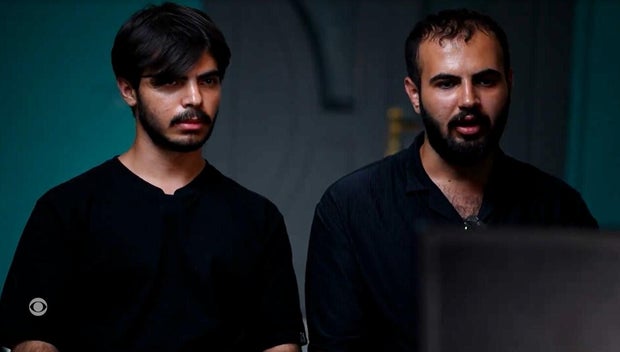
The young men, whose full names CBS News is not using to protect their families and associates still in Iran, said they took part in 2022 in the "Woman, Life, Freedom" demonstrations. Those protests were sparked by the killing of Mahsa Amini in police custody.
Like the brothers, Amini was a member of Iran's Kurdish minority and lived in the country's western Kurdish heartland, where there has long been deep animosity and distrust toward the country's theocratic rulers.
Karvan and Kavian also took part in the massive protests that swept across Iran in January, before the uprising was violently quashed by the regime. President Trump has said 32,000 people were killed in the crackdown, though that figure has not been verified. Rights groups say tens of thousands were arrested and dozens have already been executed.
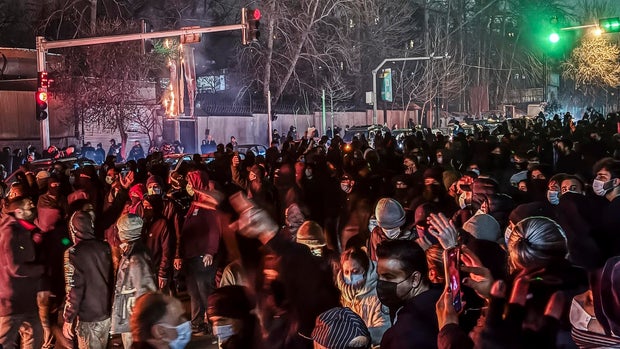
"We felt the tension, and we saw how people were arrested and injured. We saw how they demonstrated against the regime and fought back against them, so their voices could be heard," Karvan told CBS News. "It gave us a feeling of purpose to participate in the demonstrations and make our voices heard."
"We saw how people were shouting against the state and government. We saw how they threw stones at the authorities and how the regime used gas bombs against them to disperse them, injuring many people," Kavian said.
President Trump announced a ceasefire with Iran on April 8, which, despite recent exchanges of fire, is still ostensibly in place as indirect negotiations between the two countries continue.
But the truce brought little relief for most Iranians.
"We felt that the regime started going after people again," said Karvan. "They were arresting people who went to the demonstrations, accusing them of being Israeli spies. They were even arresting people just for taking photos of bombed locations."
The brothers said the situation in Kurdish areas is even worse than other parts of Iran. They said the economy is suffering badly, and there are more regime checkpoints in cities where security forces check people's IDs and phones, "looking for anything that could be held against you."
"Under such a brutal regime it is possible to be detained, tortured and even get executed just for raising your voice," Zhila Mostajer, an investigator for the Hengaw Organization for Human Rights, told CBS News.
According to Hengaw, about 40,000 people were detained during the protests early this year, and while most have since been released, many remain behind bars. The organization says 31 people detained during the protests have been sentenced to death, and 15 have already been executed.
"It was very hard for us, but we chose to take the risk because we are safer here," Karvan said of the brothers' decision to leave their family behind to seek safety. "We hoped to be away to show the world what is happening, so the world understands what is happening inside Iran."
The young men have no plan and no idea how their lives will shape up now, but they said they won't return to Iran while the Islamic Republic regime is still in control.
Karvan told CBS News they hope the world will see how Iranians are suffering and push for the change that President Trump offered more than four months ago — and not just a new deal on the Strait of Hormuz or Iran's nuclear program.
"They always talk about how uranium is a danger if it is in the regime's hands," he said. "If you truly knew how they treat their people, you would never let them enrich uranium, and you would never let this regime exist."
"They are a really dangerous regime," he added, urging people around the world to "look deeper," because "if they do this to their own people, just imagine what they would do to the rest of the world."
In:
Iranian protesters who fled country speak out
Iranian protesters who fled Iran say war has made the regime "even more extreme"
(04:22)