/ CBS/AP
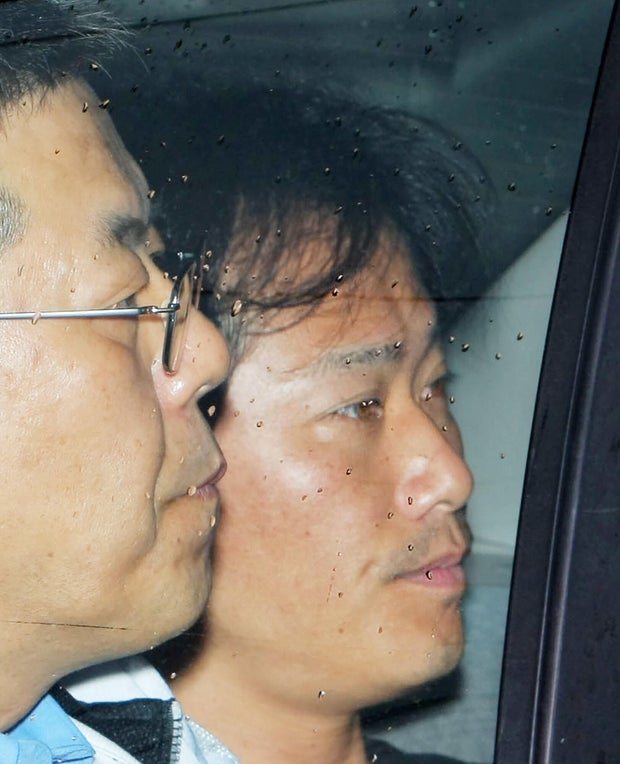
A man who killed five people by setting fire to a pachinko parlor in 2009 was hanged Friday in Japan's first execution by Prime Minister Sanae Takaichi 's government as the country faces growing calls for more transparency and the abolition of capital punishment.
Sunao Takami set fire to the crowded pachinko parlor in Osaka by spreading gasoline and throwing a lit match, engulfing the building, killing five and injuring 10 others, Justice Minister Hiroshi Hiraguchi said.
"It caused extremely serious outcomes and dealt a major shock and fear to the society," he told a news conference, adding "the victims whose lives were taken away must have felt unimaginable pain and fear, and those who suffered injuries ... were forced to live with long-term effects."
"As justice minister, I have ordered an execution after careful and thorough considerations," he said. The Justice Ministry said the hanging took place earlier Friday.
Takami, 58, was convicted of murder, attempted murder and arson and sentenced to death in a 2011 Osaka District Court ruling. His appeals were rejected in 2016 by a Supreme Court decision upholding the death penalty.
Japan now has 100 people on death row, including 43 seeking retrials, Hiraguchi said.
Japan has faced growing criticism over its use of the death penalty, as a majority of the international community has abolished capital punishment. Japan and the U.S. are the only two countries in the Group of Seven leading industrialized nations that put people to death.
Calls to abolish capital punishment or increase transparency have grown after the 2024 acquittal of the world's longest-serving death-row inmate, Iwao Hakamada.
Executions are carried out in secrecy in Japan, where prisoners are not informed of their fate until the morning of their hanging.
Since 2007, Japan has begun disclosing the names of those executed and some details of their crimes, but disclosures are still limited.
Hiraguchi said he has no intention to change the practice, saying disclosure of additional details would disturb the mental state of the death-row inmates.
He defended hanging as a valid method of execution, citing a number of past Supreme Court decisions saying hanging is not considered more cruel than other methods of execution such as lethal injections, electrocution and shooting.
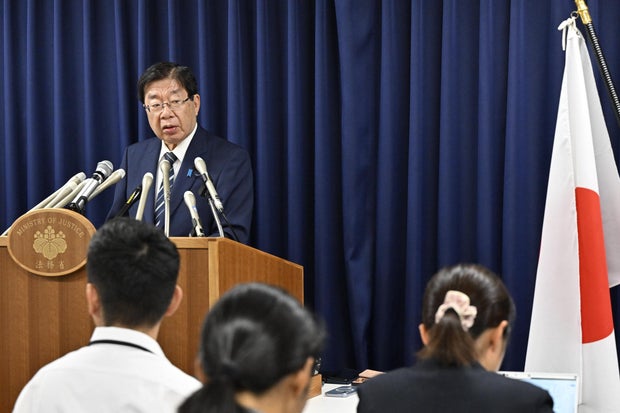
Hiraguchi cited surveys showing the vast majority of Japanese supporting the death penalty as an unavoidable option. Whether to retain or abolish capital punishment is a crucial issue that affects the core of Japan's criminal justice system and requires careful consideration and broad public debate, he said.
Friday's hanging was the first by Takaichi's government and took place during a parliamentary recess - a move criticized as a tactic to avoid public debate. Hiraguchi denied it was intentional.
Japan in 2025 executed a man known as the "Twitter killer," who was convicted of killing and dismembering nine people in his apartment near Tokyo in 2017.
Japan's crime rate is relatively low, but some high-profile mass killings have occurred in recent years.
Global rise
Amnesty International said in May that recorded executions worldwide rose 78 percent in 2025 to 2,707, the highest number documented by the rights group since 1981.
Iran put at least 2,159 to death, more than double the 2024 number, a minimum of 356 in Saudi Arabia, 47 in the United States and 17 in Singapore, according to Amnesty.
"The 2025 total does not include the thousands of executions that Amnesty International believes continued to be carried out in China, which remained the world's lead executioner," it said.
A Japanese government survey in 2024 found that 83 percent of respondents considered the death penalty "unavoidable."
Support for abolition, however, rose to 17 percent from nine percent five years earlier.
The justice ministry told AFP last year that Japan carried out one execution in 2022, three in 2021, three in 2019 and 15 in 2018.
Sarin attack
Among those executed in 2018 included guru Shoko Asahara and 12 former members of the Aum Shinrikyo doomsday cult, which orchestrated the 1995 sarin gas attacks on Tokyo's subway system that killed 14 people.
Japanese law stipulates that executions must be carried out within six months of a final verdict after appeals are exhausted.
In practice, however, most inmates are left on tenterhooks in solitary confinement for years -- and sometimes decades -- with sometimes severe consequences for their mental health.
There have also been a number of wrongful convictions.
Most famously, Iwao Hakamada spent decades on death row over a 1966 quadruple murder before being released in 2014 and fully exonerated in 2024 at the age of 88.
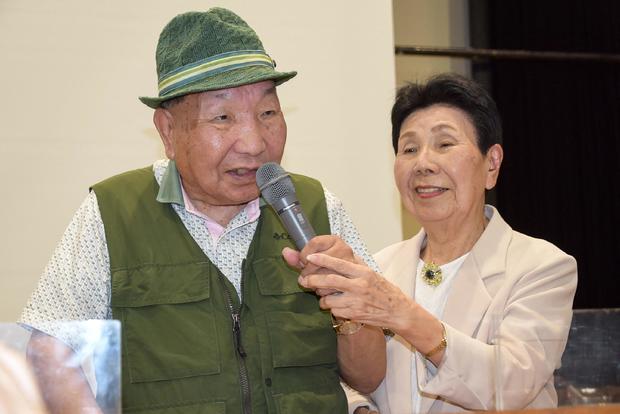
A court ruled that investigators had tampered with evidence and said he had suffered "inhumane interrogations meant to force a statement."
Hakamada was the fifth death row inmate granted a retrial in Japan's post-war history. All four previous cases also resulted in exonerations.
Rights groups have also criticized what they call "hostage justice" when suspects spend sometimes years in pre-trial detention under pressure to confess.
contributed to this report.
In: