Caitlin Clark hit in throat during WNBA loose-ball scramble, sparking backlash and game suspension
WNBA superstar Caitlin Clark was hit in the throat during a loose-ball scramble, sparking outrage and a one-game suspension for Alyssa Thomas. Fox News' Garrett Tenney reports on the 'absolutely unacceptable' incident and the coach's reaction. Political analyst Gianno Caldwell discusses Clark's immense impact on WNBA viewership, including a $2.2 billion deal, and the role of gender and race in the controversy.
Three years into her WNBA career, most people still can't have an honest conversation about Caitlin Clark. So we're going to have one right now.
Clark emerged as a phenomenon during her junior season at Iowa. Very few people had a negative word to say about her. That changed during the NCAA tournament when LSU forward Angel Reese taunted Clark with the "You can't see me" gesture, the celebration Clark had made famous throughout her college career.
Reese's taunt drew criticism online. Notably, Barstool Sports founder Dave Portnoy called her a "classless piece of s---."
From that moment forward, a new narrative took hold, one that stated Reese received more backlash than Clark for the gesture because she is Black. At this point, Clark was no longer just the sport's biggest star. She became a symbol in a broader cultural argument about race.
The argument, of course, ignored an obvious distinction. The "You can't see me" taunt, popularized by John Cena, had become Clark's signature. Reese intentionally stole it and waved it directly in Clark's face. In wrestling, that would be viewed as classic heel behavior. Context mattered.
But as you will soon read, facts matter very little in the commentary surrounding Caitlin Clark, much of which is fueled by a loathsome combination of race idolatry, jealousy, and territorialism.
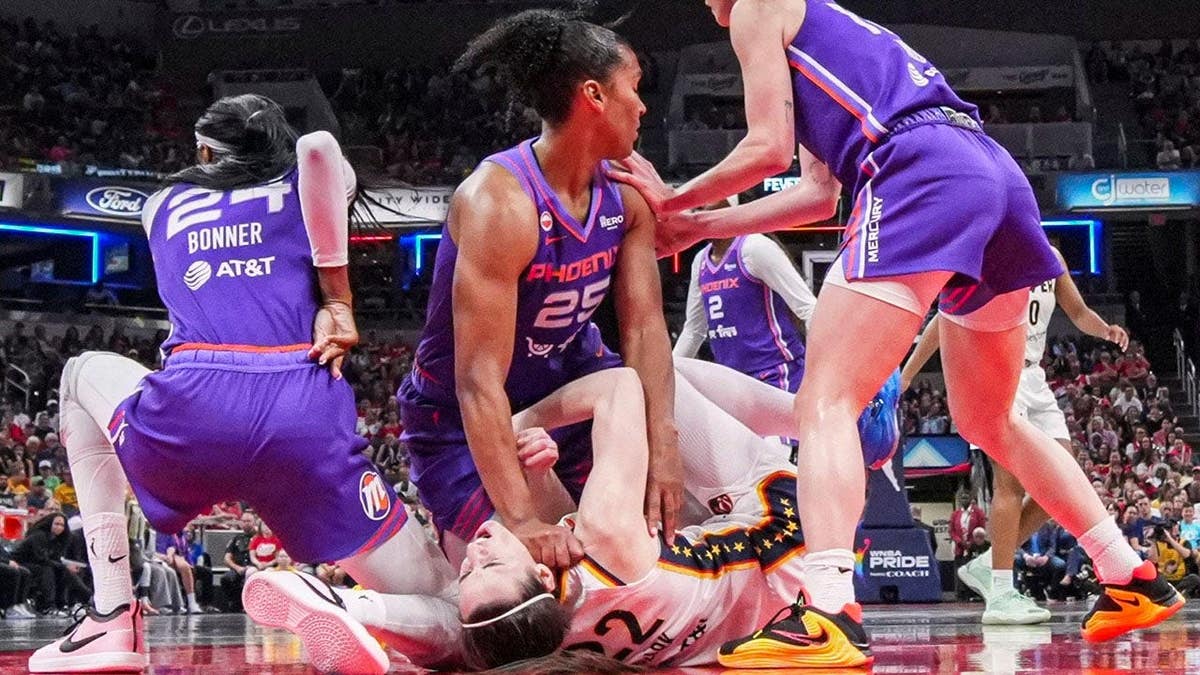
Phoenix Mercury forward Alyssa Thomas scrambles to get up over Indiana Fever guard Caitlin Clark during a game at Gainbridge Fieldhouse in Indianapolis on June 24, 2026. The Phoenix Mercury defeated the Indiana Fever 111-109. (USA TODAY Network via Reuters Connect)
As Clark's popularity grew during her rookie season, critics increasingly attributed it to "whiteness" rather than talent, charisma, or style of play. Commentators such as Jemele Hill argued that Clark's appeal was inseparable from her being a straight White woman in a league made up primarily of Black and lesbian players.
"We would all be very naive if we didn't say race and her sexuality played a role in her popularity," Hill told the Los Angeles Times in 2024.
There is no clear evidence that Clark's popularity is tied to her race or sexual orientation. That argument would deserve more consideration if America consistently elevated White athletes above more accomplished Black athletes. However, that is not the case.
The biggest stars in American sports over the past three decades are Michael Jordan, Tiger Woods, LeBron James, Steph Curry, Kobe Bryant, Serena Williams, Patrick Mahomes and Floyd Mayweather. That is not exactly the profile of a sports culture searching for the next great White hope.
What these athletes have in common is greatness, personality and aura. Clark is no different from Jordan, Curry, Williams, or Mahomes in that regard.
"But A'ja Wilson is a better player," critics often respond.
Indeed. Nikola Jokić has also been the best basketball player in the world over the past decade, yet he isn't among the NBA's most popular players. Personality and aura are just as important to stardom as greatness.
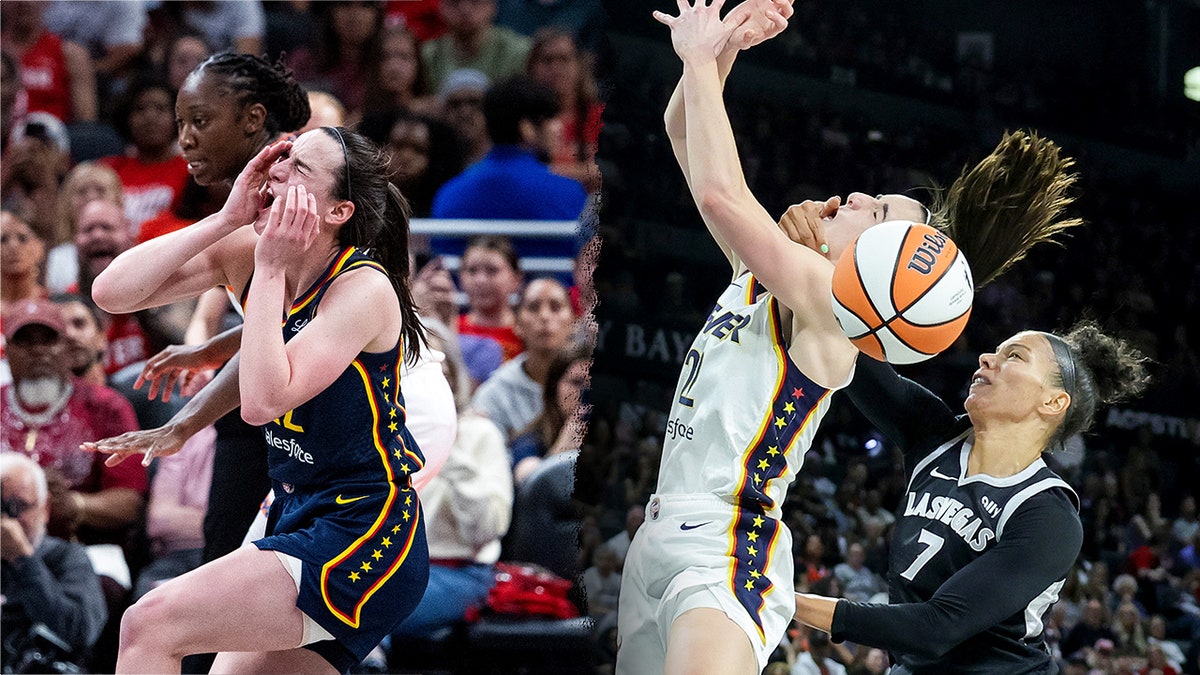
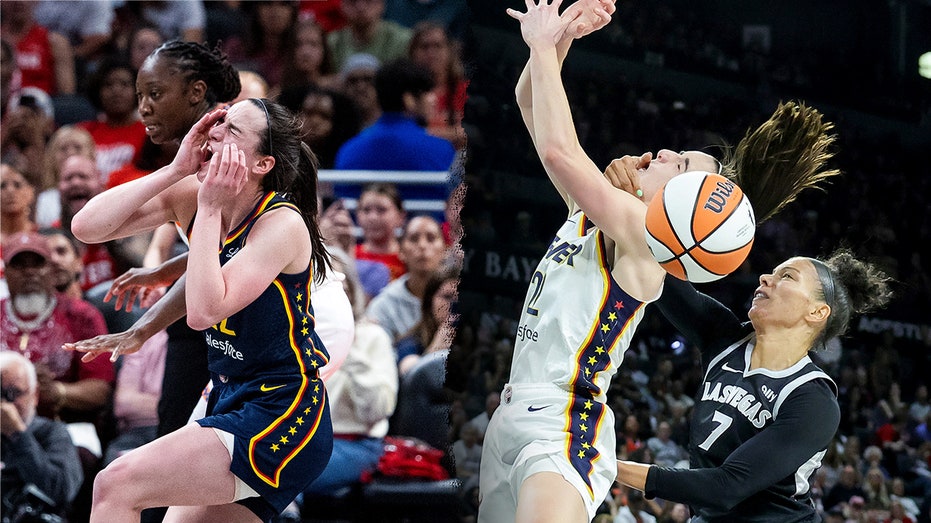
Caitlin Clark attempts a shot while being fouled during a basketball game. (Getty Images/IMAGN Images)
Still, the narrative surrounding Clark spread through sports media and WNBA locker rooms, locker rooms made up mostly of Black women.
It's not difficult to understand where that leads. As society has proven, there are consequences for telling an entire demographic that the success of their white counterparts comes at their direct expense. The concept is inherently Marxian.
It's also an effective form of brainwashing. Unsurprisingly, Clark entered the WNBA as a target of various Black players.
Chennedy Carter delivered a blindside hip check, then later shared a social media post encouraging someone to "hurt" Clark next time.
DiJonai Carrington poked Clark in the eye during a playoff game and later posted online about Clark's supposed privilege.
Angel Reese committed several hard fouls against Clark and posted a TikTok mocking her as a "white girl afraid to catch the fade."
Even then, the WNBA media acted as if Clark was responsible for the animus.
New York Times reporters asked Clark twice whether she had an obligation to speak on behalf of black women in the league. ESPN commentator David Dennis Jr. argued Clark has a "moral obligation," as a White woman, to defend Black women, even if they were the ones hard-fouling her.
Eventually, Clark acknowledged her own "white privilege" in an interview with Time, presumably while wearing a black eye.
"I want to say I've earned every single thing, but as a white person, there is privilege."
Think about how unusual that moment was. The league's biggest star felt compelled to acknowledge racial privilege while repeatedly on the receiving end of hard fouls from opponents of a different race.
CHINEY OGWUMIKE'S DEFENSE OF ALYSSA THOMAS REINFORCED EVERYTHING CRITICS SAY ABOUT THE WNBA MEDIA
Think about how unusual that moment was. The league's biggest star felt compelled to acknowledge racial privilege while repeatedly on the receiving end of hard fouls from opponents of a different race.
During her second season, it wasn't clear whether that hostility remained. Clark played in just 13 games because of various injuries.
This season removed any doubt.
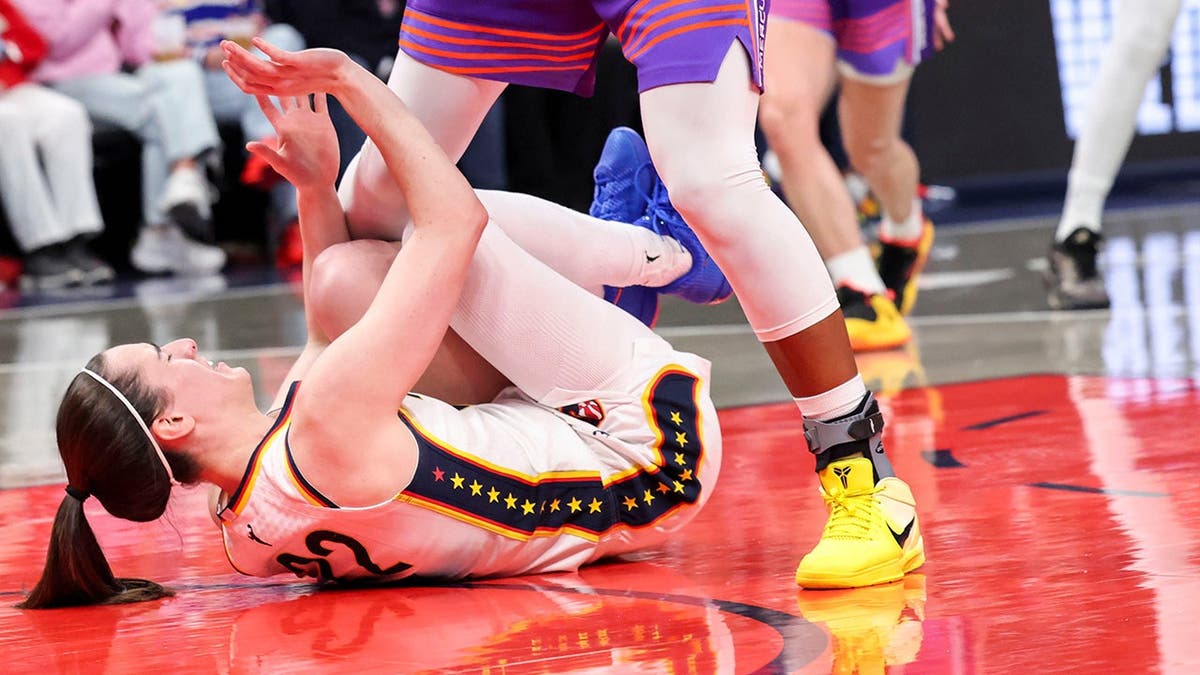
Indiana Fever guard Caitlin Clark shown after falling in the lane while Phoenix Mercury forward Alyssa Thomas watches the ball at Gainbridge Fieldhouse Indianapolis, Indiana on June 24, 2026. (Grace Smith/IndyStar / USA TODAY NETWORK via Imagn Images)
Last week, Phoenix Mercury forward Alyssa Thomas drove her fist into Clark's neck. Officials did not call a foul. Thomas was suspended one game afterward. The play was dangerous, unnecessary, and nowhere close to a legitimate basketball play.
Yet parts of the media immediately shifted toward minimizing what viewers had plainly watched.
In one of the more embarrassing segments in the history of sports talk, ESPN analyst Chiney Ogwumike defended Thomas Sunday evening, arguing that Thomas simply plays aggressively, Clark embellishes contact, and the play only appears egregious when slowed down frame by frame.
Ogwumike's credibility on this subject is already questionable. Last year, she amplified a false accusation that Clark fans directed "monkey noises" toward Angel Reese, an allegation the WNBA later said it could not substantiate.
OutKick requested comment from Ogwumike and Hannah Storm, who hosted the segment. Neither responded.
Elsewhere, Jemele Hill argued that the outrage over Thomas' hit reflected hostility toward Black women.
"So much of this Caitlin Clark discourse is absolutely rooted in hatred or dislike of Black women. The language is the tell. People suggesting Alyssa Thomas should be arrested, describing fouls against CC as 'assault' and 'abuse,' and even this absurd notion that she should just pack up and leave the WNBA to 'humble' them … all points back to this weird fixation people have with wanting to see Black women put in their place and punished," Hill posted on Threads.
Note: People use the word "assault" because driving a fist into someone's neck is, by definition, closer to assault than a basketball play. If the other players simply fouled Clark, no such words would be necessary.
Another note: Jemele Hill accused OutKick of making the story about race last week. She then immediately followed by making the story about race herself, claiming the discourse is "rooted in hatred or dislike of Black women."
Has anyone outside of Lisa Leslie in the WNBA TV media sphere defended Clark? Or at least discussed how that wasn’t a basketball play? Put any blame on Thomas at all? Just seems like everyone is finding ways to make that play seem normal or making Thomas a victim. Seems odd. Like we all see the video. We’ve all watched ball, former NFL player Geoff Schwartz observed.
Not odd. Calculated.
The narrative states that if you support Clark, you are doing so because she is White and the other players are Black. Thus, very few people are going to defend Clark at the risk of someone labeling them a "racist" or a "sellout."
But such fear tactics should never hinder the objective truth. And the truth is as follows:
• Caitlin Clark transcended women's basketball into the mainstream.
• Black players and commentators are convinced she has done so only because she is a straight White woman.
• Those players resent Clark because of that belief.
• The majority of the media is too afraid to say so.
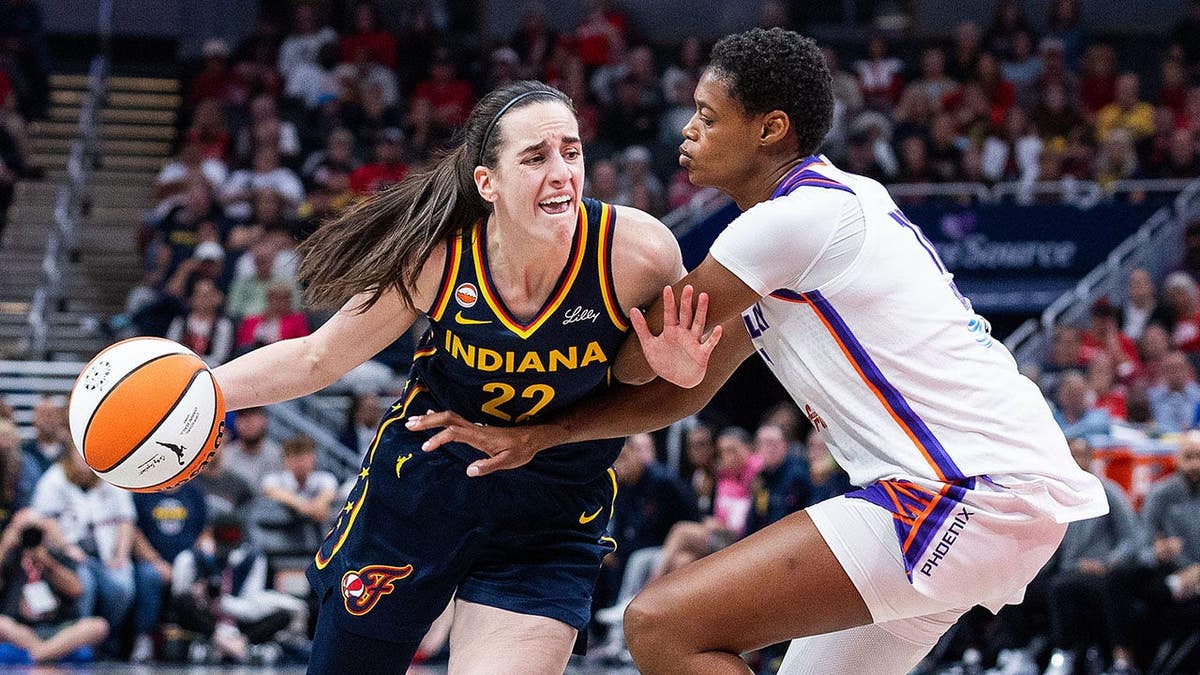
Indiana Fever guard Caitlin Clark dribbles the ball while Phoenix Mercury forward Valeriane Ayayi defends in the second half at Gainbridge Fieldhouse in Indianapolis, Ind., on June 24, 2026. (Trevor Ruszkowski/Imagn Images)
To be clear, Clark is no angel. She complains too often. She flops more than a star player should, although Shai Gilgeous-Alexander might argue otherwise.
And all of that is fair to say. It's part of her story. However, the idea that she and her White fans are the problem is not factual.
The truth is that Black players and media are uncomfortable with Clark's stardom. They don't like it. They don't believe she fits the preferred culture of the WNBA.
Considering that Clark is also the first major White American sports star to emerge after 2020. This gives Black players and commentators a sense of freedom, and even encouragement, to discriminate against her on the grounds of racial justification.
The WNBA had an opportunity to establish itself as one of the major sports leagues in America. Behind Clark, the league could have showcased and grown other stars around her, including many black players.
Instead, the league as a whole crumbled under the spotlight, often omitting Clark from posters and promotional material simply to signal its virtue.
CLICK HERE TO DOWNLOAD THE FOX NEWS APP
The last three seasons have demonstrated that the WNBA is not ready for the moment. The race idolatry among players, coaches, referees and much of the media runs too deep. They would rather remain niche, unprofitable and irrelevant than reach new heights on the back of a White girl from Iowa.
There are likely many things I have written in this piece that will bother people. That's fine. The truth is often uncomfortable and inconvenient. In the case of Caitlin Clark, that's why so few people are willing to state the truth.
Bobby Burack is a writer for OutKick.