It's only fitting that negotiations between the SEC and Big Ten over the historic "Protect College Sports Act" came down to the final days before senators could bring the legislation to the floor for a vote.
Between the late-night conversations involving senators, the White House and conferences across college athletics, everyone knew they were racing against the clock to reach a version of the bill that all sides could support.
The dire time restraints were real, along with the contentious Zoom meetings or phone calls that have taken place over the past five months.
PRESIDENT TRUMP PUSHES LAWMAKERS ON LEGISLATION AS 'PROTECT COLLEGE SPORTS ACT' HANGS ON BY A THREAD
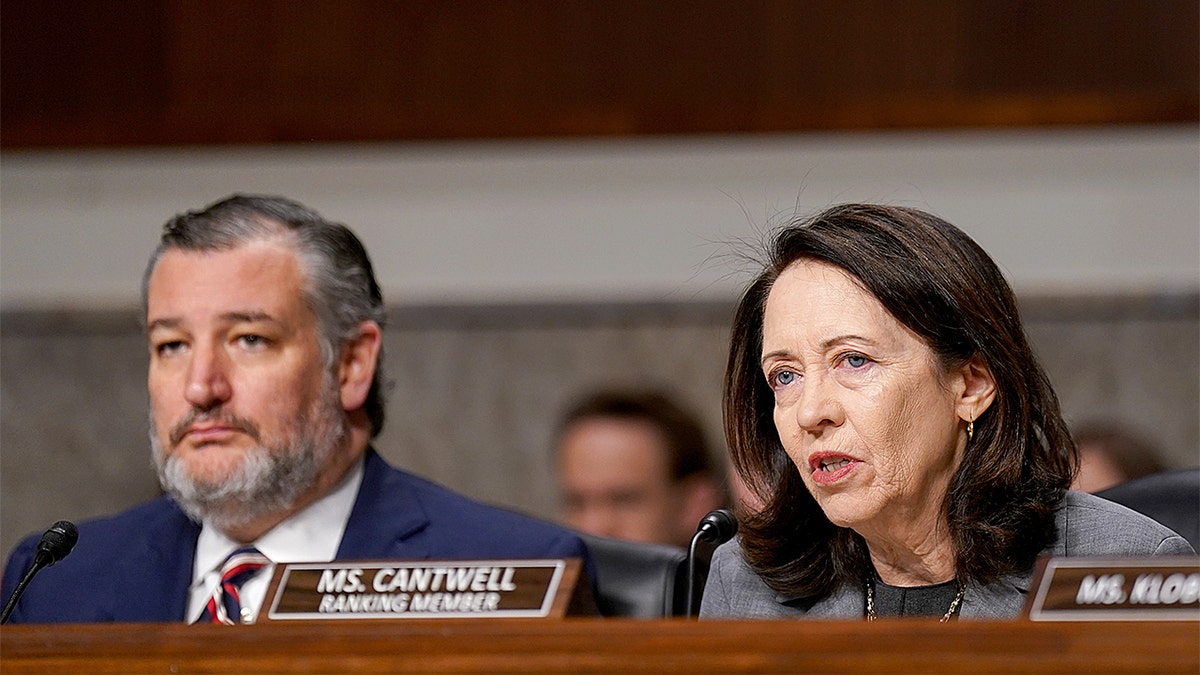
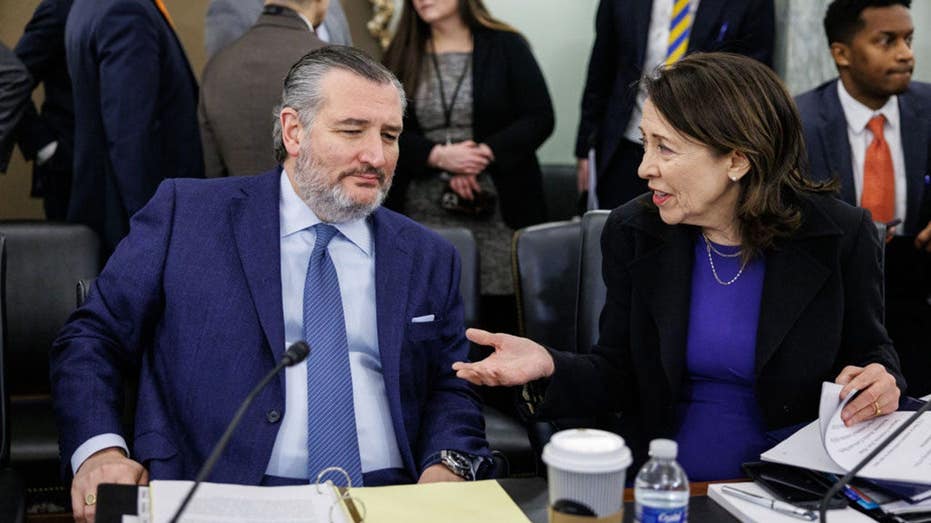
Senator Ted Cruz, a Republican from Texas and chairman of the Senate Commerce, Science, and Transportation Committee, left, and Senator Maria Cantwell, a Democrat from Washington and ranking member of the Senate Commerce, Science, and Transportation Committee, during a hearing in Washington, DC, US, on Wednesday, April 2, 2025. Boeing CEO Kelly Ortberg plans to tell lawmakers that the planemaker has made mistakes overhauling its quality standards and culture. Photographer: Al Drago/Bloomberg via Getty Images (Al Drago/Bloomberg via Getty Images)
As Senators Ted Cruz (R-Texas) and Maria Cantwell (D-Wash.), along with Eric Schmitt (R-MO), led the charge to present a bipartisan bill that would satisfy the power brokers, reaching an actual agreement between parties involved looked almost impossible just days ago.
"Now progress can now be made in protecting women and Olympic athletes and moving this legislation closer to the President's desk," Senator Maria Cantwell told OutKick-Fox News
And these conversations were taking place all across the country. While Big Ten Commissioner Tony Petitti worked the room at media days in Chicago, he remained in constant communication with conference officials while also speaking with SEC Commissioner Greg Sankey as many as 10 times on Wednesday alone.
The Big Ten met at 1 p.m. ET Thursday, while the SEC, Big 12 and ACC hopped on a conference call at 4 p.m. ET. To say that this was an eventful day for congressional aides and senate staff would be an understatement.
But, none of this should come as a surprise, given that there is so much at-stake right now in college athletics.
It's politics, so this probably feels like a random Wednesday in Washington.
A White House official had this to say to OutKick-Fox News on Thursday afternoon about the ongoing negotiations:
"The White House has been following these negotiations closely, and the President has been actively engaged. President Trump wants to save college sports, and he wants the bill done"
Thursday night, sources told OutKick-Fox News that White House officials, along with members of President Trump's college sports committee, were involved in conversations on what the next steps would be to get this to the Senate floor. New York Yankees president Randy Levine and Texas Tech booster Cody Campbell have been helping lead the charge from the committee's standpoint.
On Friday afternoon, we reached back out to the White House regarding a push from President Trump to get the bill approved by all parties involved.
"At the President's direction, the White House and his College Sports Committee have been working together closely to deliver a permanent solution to the challenges plaguing college sports"
An all-out sprint to get this college sports legislation to a vote
Let's be honest, all of this felt rushed, with congressional leaders working to get this to the Senate floor for a vote before they are scheduled to take their annual summer recess.
In the midst of this battle, Senate Majority Leader John Thune decided to mention that he did not think there would be enough time to get this to the floor.
What he actually did was ignite a fuse between parties involved to get this legislation sorted out enough that the SEC and Big Ten could feel as though they would be able to put their support behind the bill enough to have their conference leaders start lobbying senators across their states to say "Yes" to the bill.
On Friday evening, that patience finally paid off for everyone involved.
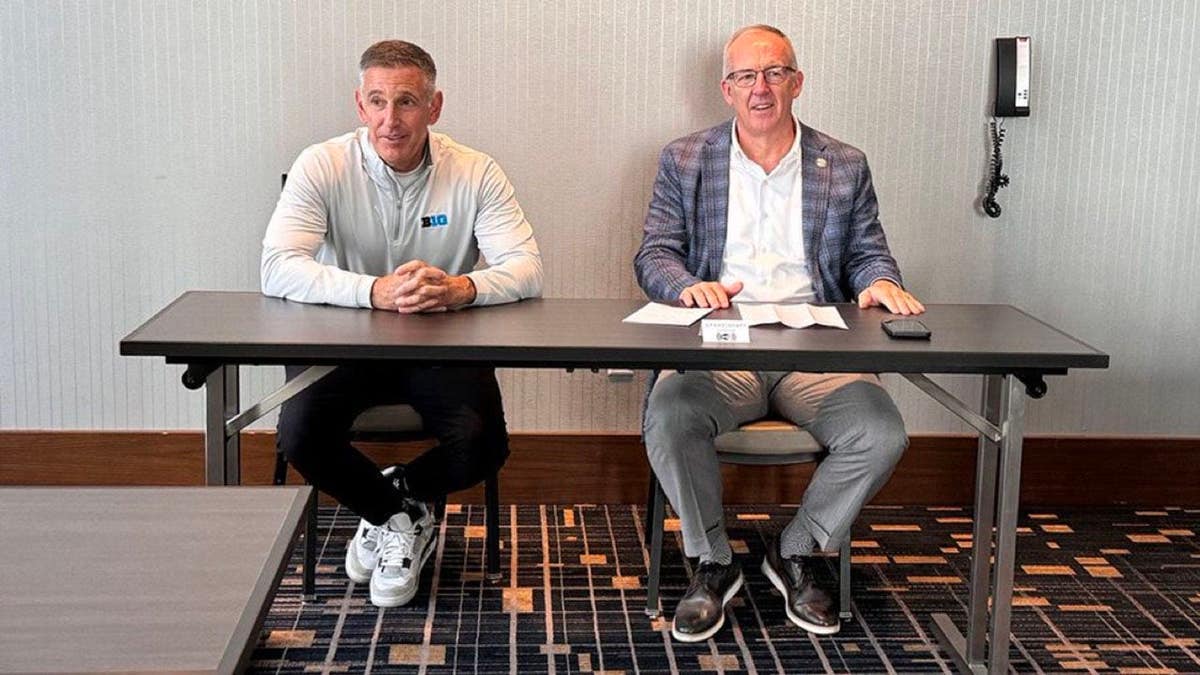
SEC commissioner Greg Sankey and Big Ten commissioner Tony Petitti meet with reporters during a joint press conference in Nashville, Tennessee (Trey Wallace/FOX NEWS)
There were "deadlines" put into place by one side, while the others knew they had to take their time to sort through the language, knowing how big a deal this was for them to put their support behind a piece of federal legislation that would have major impacts on collegiate sports moving forward.
"This is not easy. We have university's to run, so athletics might be important, but we also have to rightfully consider everything else that is transpiring on our campuses," one Power-4 school president told OutKick-Fox News. "School is about to start back, and thousands of students are heading back to our cities.
"Obviously, we know how important athletics are to our school and the amount of money, and eyes, that it brings in. This was, and has been, an interesting time to be a college president or chancellor. There is a lot at stake here."
Whether it was closing loopholes centered around NIL deals that involved Multimedia Rights companies or a retention cap that would provide athletic departments an additional set of funds to retain athletes on rosters outside of the House settlement figure, this was going to take a while to sort out.
Negotiations are intense, and will keep going with conferences
Majority Leader John Thune needed to file for cloture by Thursday afternoon before he left town for the weekend if this was going to be voted on next week on the Senate floor.
In essence, this became the latest deadline after earlier timelines set by a group of senators proved unrealistic.
But, here are some of the talking points discussed over the past months.
- The Multimedia Rights deals with athletes will be included in the cap. Schools will have to sign agreements noting that the money isn’t coming from the university. This was a key provision in the updated language, and the third party deals for athletes with entities such as Multimedia Rights Partners would count towards the rev-share cap.
- There is an attestation process, which would force sponsors affiliated with the school to certify that any deal struck with an athlete is not coming directly from the school, or more importantly that the money does not actually come from the school itself or circumvent the rules.
- The one-time transfer rule would have a limited antitrust exemption for entities looking to enforce it, while also strengthening the five-year eligibility rule. As we witnessed this season with former pro-basketball players returning to college, the new bill would prevent this from occurring in the future.
- The bill would take a harder stance on tampering, outline a procedure along with penalties.
- Legislation would grant the conferences and NCAA limited antitrust exemption
- A retention pool, separate from House settlement increased from $20 million to $22.5 million. This allows athletic departments to use funds to retain players already on rosters. This also means the overall cap between the two will be $48.8 million per season.
- A cap would be put into place that contains stricter guidelines than those currently in place. This would include NIL deals that involve "associated parties" who are connected to the school itself through contract, advertising or media rights.
- Setting the amount of members each conference can have at 19. This would allow the Big Ten to add just one team, while the SEC could add three. Along with other conferences adding new schools.
- If a school were to move from one power-four conference to another, that school would have to then operate as an independent for a five-year period. This was a major sticking point, and not in the most logical way. But, it creates some protection for the Big 12 or ACC if either the SEC or Big Ten decided it wanted to raid their conference. Think of a school having to operate on its own for a five-year period, without the support of a conference, or revenue.
- If a school that is currently independent or in a Group of Six conference wants to move to a power conference like the SEC, ACC, Big Ten or Big 12, they can do this without pushback.
- The "Lane Kiffin Rule," which would prohibit coaches from leaving their schools before the season ends. Obviously, this could be challenged.
What happens next? Senators are not going silent into the night
The senators involved deserve a lot of credit in trying to actually have this legislation buttoned up enough for all parties involved to put their support behind it.
Ted Cruz (R-Texas) and Maria Cantwell (D-Wash.) continued working the phones, meeting with conference members via videoconference and trying to garner the support needed from the Big Ten and SEC to push the bill forward, which came to a head Friday night.
In order for a vote to actually take place, they need to have this in a place in which Senate Majority Leader John Thune can bring this to cloture on Monday, Tuesday morning at the very latest. Senator Eric Schmitt was actually speaking with SEC commissioner Greg Sankey on Thursday evening, hoping to find some type of resolution.
Schmitt even joined the SEC's call on Friday night to discuss the legislation before the vote was taken.
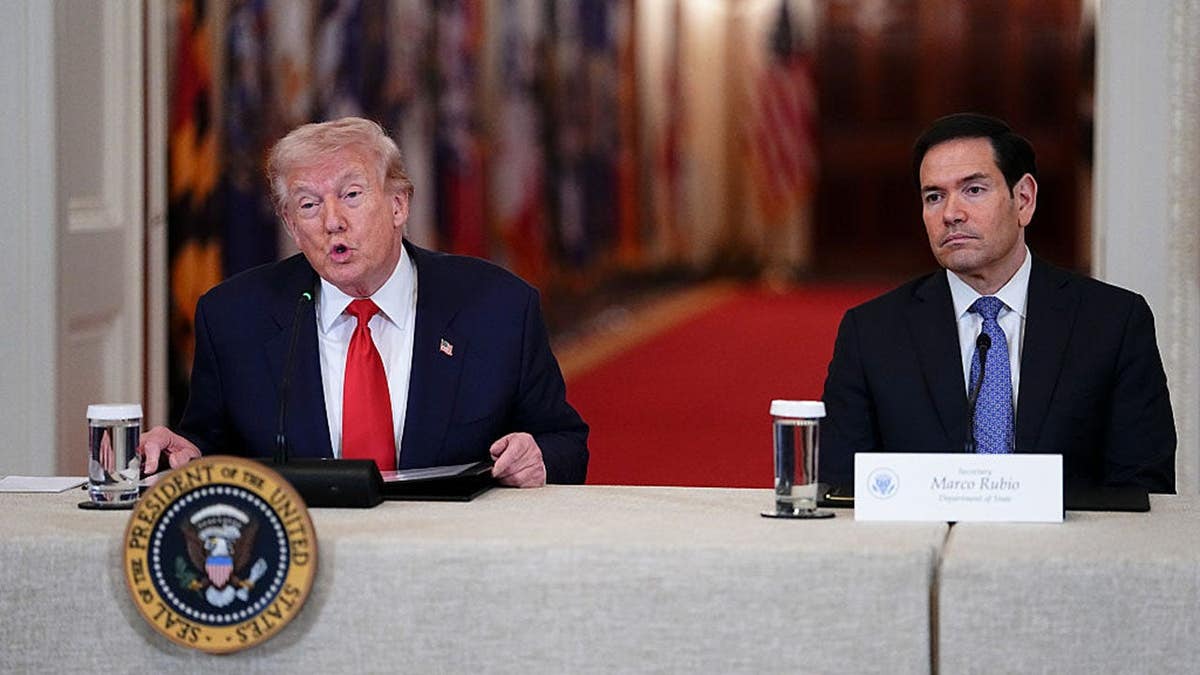
President Donald Trump and Secretary of State Marco Rubio participate in a "Saving College Sports" roundtable in the East Room of the White House in Washington, D.C., on March 6, 2026. The new council is expected to discuss a potential antitrust exemption related to college sports. (Aaron Schwartz/Bloomberg via Getty Images)
As for getting this to a vote, the clock was ticking and both the SEC and Big Ten knew it.
The Senate will take their August recess at the end of the next week, as they will technically still be in session on that Friday. But, there is a process to bringing this to the Senate floor, with cloture, which will begin once they arrive back in Washington on Monday.
I think we can all agree that once Congress returns in September, the chances of this being relevant dwindle. Fans are already getting tired of hearing about this legislation and are ready to see their favorite team take the field.
CLICK HERE TO DOWNLOAD THE FOX NEWS APP
Compared to earlier in the week, the Protect College Sports Act it looks like it might actually have a chance at reaching the House, with some thinking this wouldn’t even make it to the Senate floor.
Trey Wallace is the Sr. College Sports Reporter for OutKick.