By
/ CBS News
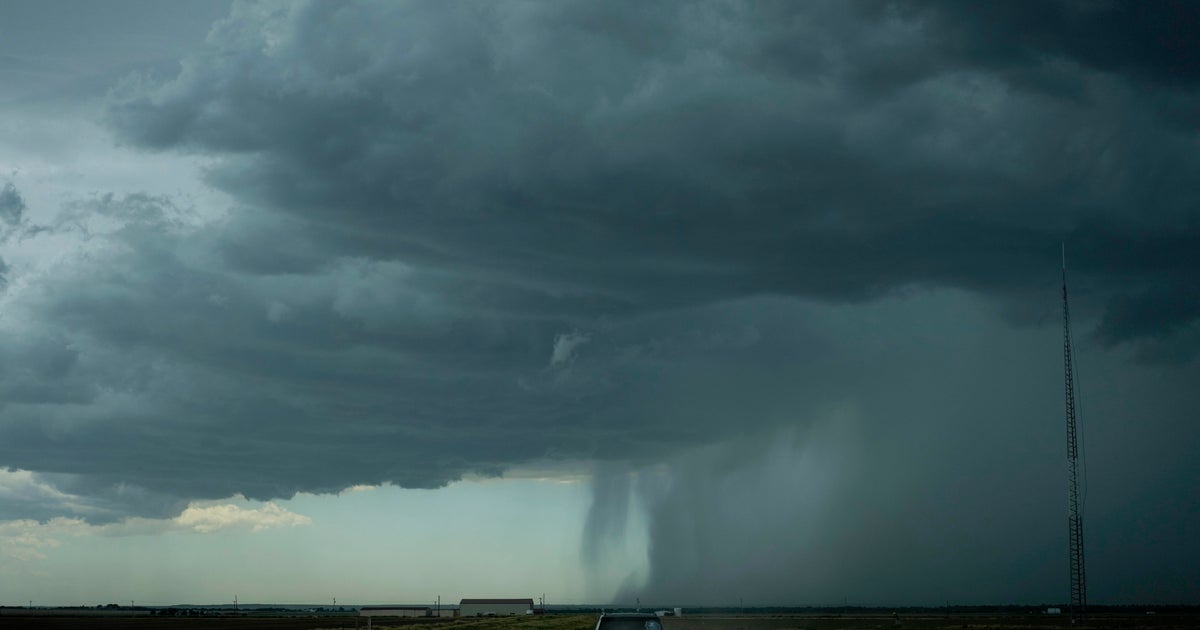
Tornadoes, hail and powerful winds linked to climate change now pose a bigger threat to homeowners than floods, hurricanes and other forms of extreme weather, according to new research.
In 2025, insurance payouts from "severe convective storms" (SCS) surpassed those resulting from cyclones, making them the costliest insured natural disasters in the world, climate risk modeling firm First Street has found in a new study.
Such weather events have "become top of mind for insurance companies, for anybody that owns assets and for residential homeowners," First Street chief economist Jeremy Porter told CBS News.
Global insurance payouts triggered by intense convective storms over the last 25 years total $794 billion — more than flooding, earthquakes and drought losses combined, according to the firm, which based its findings on data from risk management consulting firm Aon.
U.S. in the eye of the storm
In 2025, severe convective storms accounted for one-third of global natural disaster economic losses, according to First Street. Insured and uninsured losses from SCS totaled $82 billion, more than any other natural disaster; of those losses, $68 billion were concentrated in the U.S.
Financial losses caused by damaging wind, hail and tornadoes are particularly prevalent in the U.S. due to the concentration of insured residential, commercial and industrial properties.
"In the U.S., we have a lot of really valuable real estate," Porter said. "So if you start to [combine] insured assets with the increases in severe convective storms, that's where you see those numbers balloon."
SCS are generally covered by homeowners' insurance, meaning most Americans with a mortgage are insured against such risks. However, as these storms become more frequent with the world's changing climate, homeowners could face higher insurance premiums.
Insurance costs are increasing faster in some parts of the U.S., notably the Midwest and northern Texas, than in other regions due to severe storms becoming more widespread, Porter told CBS News.
"We haven't seen private insurance companies pull out of those markets yet," he told CBS News. "We have seen them raise rates relatively rapidly."
Illinois and Ohio stand out as particularly vulnerable, given their sizable urban areas and valuable real estate, First Street found, with Porter describing the two states as lying along a "severe convective storm belt." North Carolina and Georgia are also at risk given the real estate density in Atlanta and Charlotte, he added.
Epic hail
"Convection" describes the upward movement of heat and moisture in the Earth's atmosphere, which can create thunderstorms and clouds, according to the National Weather Service.
First Street describes severe convective storms as "short-duration but high-impact weather events" — the type of storm that passes through a region quickly but can leave serious destruction in its wake.
"Unlike hurricanes or earthquakes, which concentrate losses in a small number of catastrophic events, SCS generates recurring losses through frequent hail, wind, and tornado outbreaks," First Street said in its report.
Of the different types of weather that qualify as a severe convective storm, hail is the biggest driver of insurance payouts, followed by severe winds.
"When a big hailstorm hits an area, it tends to damage everything in the area: homes, cars and infrastructure — whatever's there," Porter said.
If current trends continue, First Street projects that SCS will become the world's third-costliest natural disaster in the next decade in terms of lost economic growth. Such losses generally stem from factors including mass transit closures, reduced retail shopping and lower commercial productivity.
"We're expecting to continue to see growth in frequency, exposure and damages from these types of events," Porter said.
Edited by Alain Sherter
In:
Report: 2015 to 2025 was warmest decade on record
2015 to 2025 was warmest decade on record, U.N. report finds
(02:45)