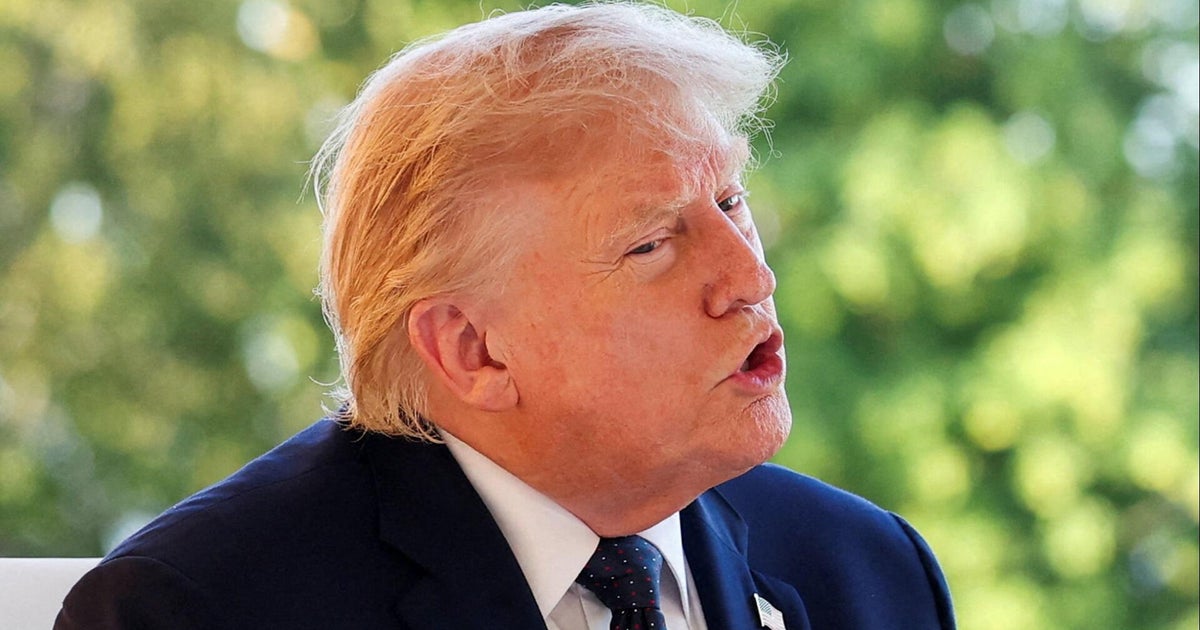
President Donald Trump and Vice President JD Vance both signed a memorandum of understanding with Iran, which would cease fighting on all fronts for 60 days and is expected to reopen the Strait of Hormuz to all traffic, a senior administration official said Monday.
The official said the signatures were done digitally and that a formal signing will happen in Geneva, Switzerland on Friday.
While the official said the details of the agreement will be released within the next 24 to 48 hours, Trump on Monday said the text of the memorandum of understanding would be released "pretty soon," but sometime after Friday.
"This is a very powerful document, and I want it to be released. So, probably pretty soon," Trump said during a press conference with French President Emmanuel Macron shortly after landing in France for the G7.
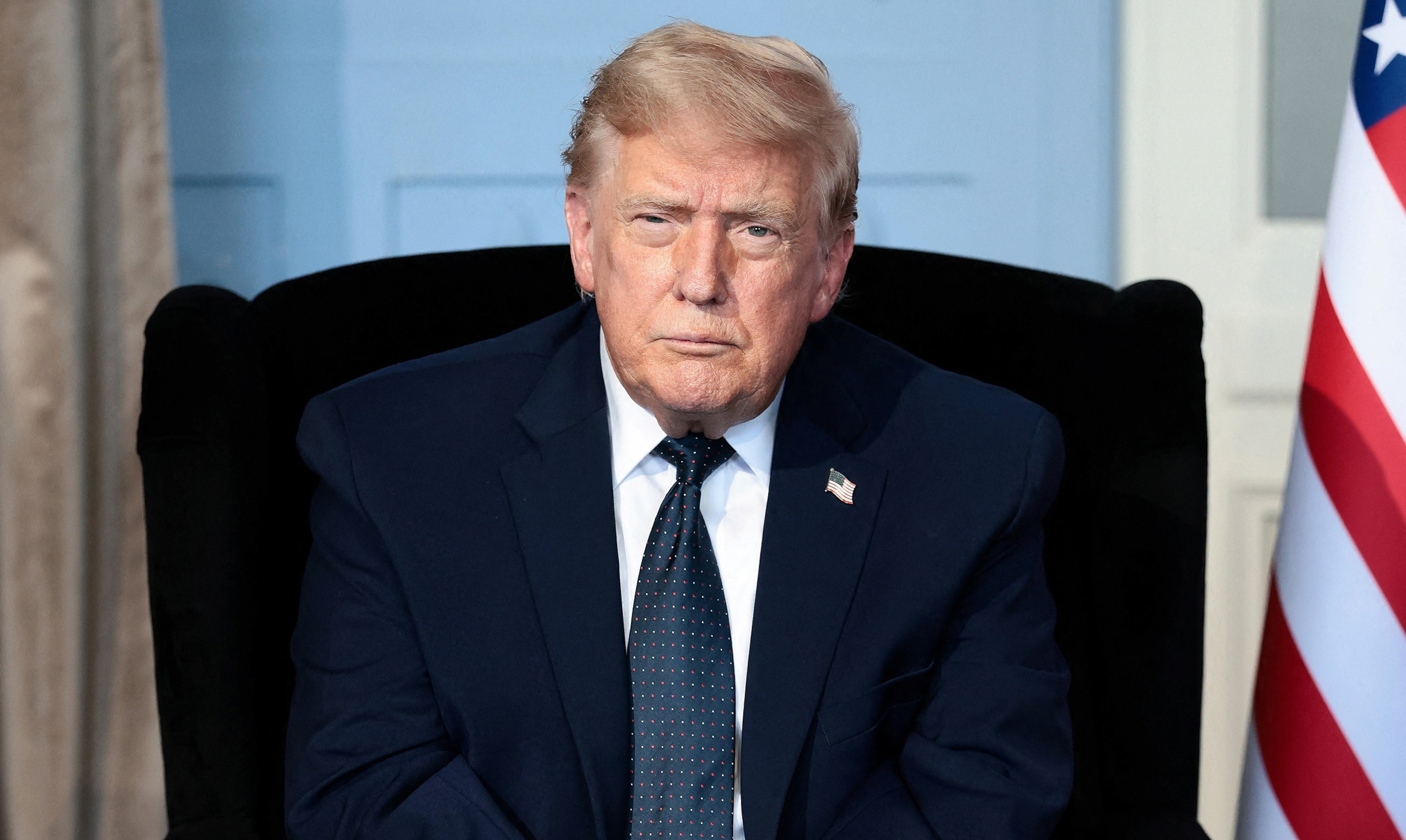
President Donald Trump speaks as he attends a bilateral meeting with French President Emmanuel Macron during the G7 Summit in Evian-les-Bains, France, June 15, 2026.
Evelyn Hockstein/Reuters
Trump said "it depends" if he will attend the signing ceremony in Geneva on Friday, but that Vance would be there.
Senior administration officials on Monday acknowledged there was still significant work to be done during the detailed nuclear negotiations to come, but asserted they now had direct relationships with “a number of people at the highest levels of Iranian government” and had reached “what we believe will be an understanding in the next phase.”
A senior administration official said the memorandum of understanding "provides for the immediate opening of the Strait of Hormuz," which Iran closed after the war started. The official also emphasized "immediate -- just to be clear here, it takes a little bit of time, because you know you have mines in the strait."
Spokesman for Iran’s Foreign Ministry, Esmaeil Baqaei, said that, according to the MOU, Iran will be responsible to provide "the security and safe traffic of the ships," adding that Tehran will do so in cooperation with Muscat and in consultation with stakeholders.
On Monday, the president said that "the strait is already partially opened" and that it will be fully opened by Friday. They are still working to clear the area of sea mines, he said.
"I think it will adjust very, very quickly, and I think obviously the prioritization will be on the heavy tankers, you know, the gas, the oils. I think that will actually flow very quickly," the official said.
The U.S. blockade of Iranian naval ports will lift as well, but the U.S. Navy warns that it will remain in place until the agreement is formally completed.
Popular Reads
On the topic of tolls, the official said that the MOU ensured the Strait of Hormuz be "toll-free for 60 days," with the expectation that it will become part of the "final agreement as well."
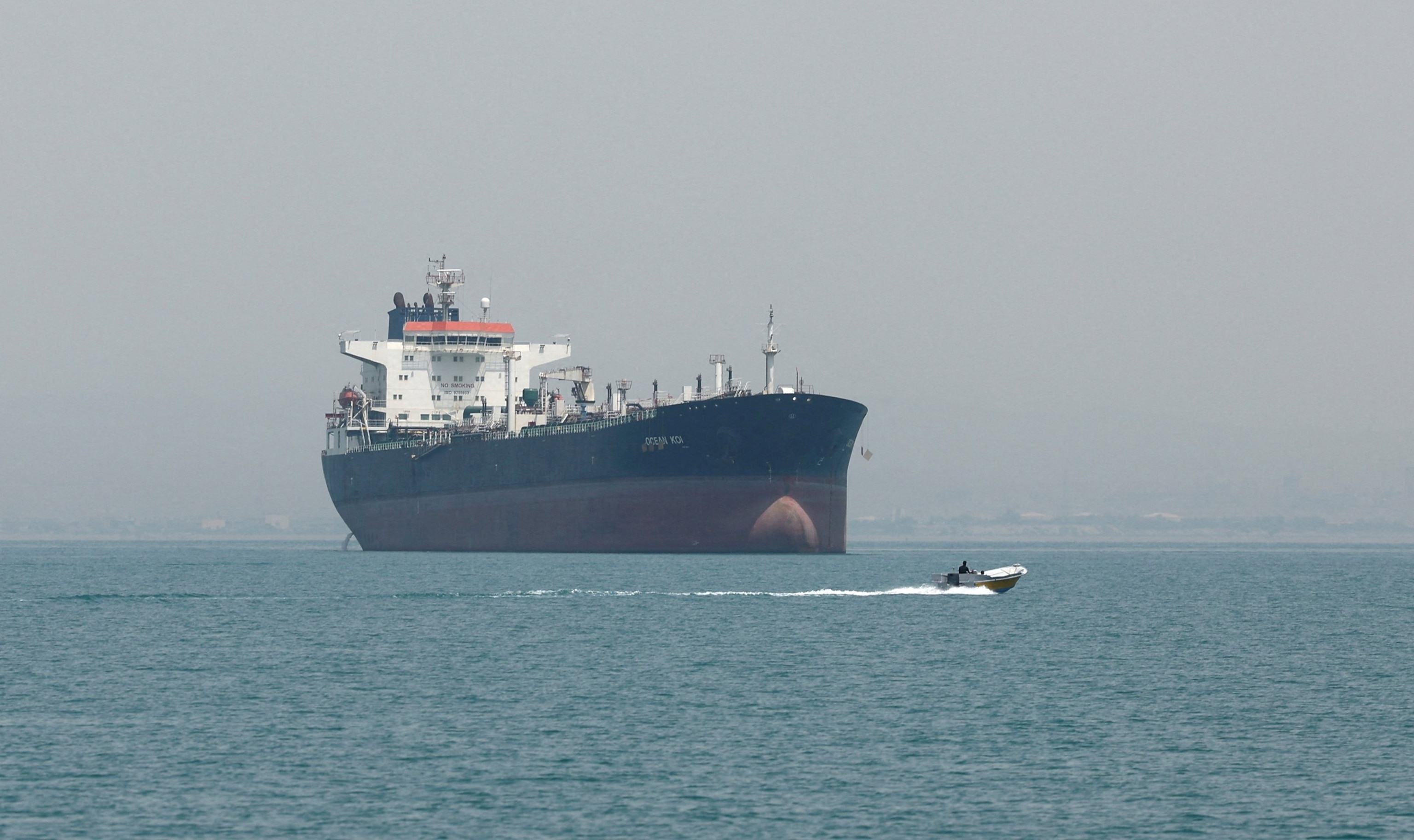
Vessels in the Strait of Hormuz, Iran, May 22, 2026.
Majid Asgaripour/West Asia News Agency via Reuters
Iranian officials said that a ceasefire in Lebanon is included within the deal. However, Israel's defense minister said after the agreement was announced that Israel does not plan to remove its forces from southern Lebanon.
When pressed about Israel's role in the MOU, one of the senior U.S. administration officials responded, saying that Israel withdrawing from Lebanon was "not a condition of the deal."
"The deal is a ceasefire, and it will not be a one-way ceasefire, meaning that if Iran is not able to control Hezbollah, and if they attack Israeli positions or Israeli towns, Israel will have the right to defend themselves and respond," a senior administration official said.
The senior U.S. administration official said that MOU's outline includes "verifying that [Iran is] not building a nuclear weapon and not funding radicalism and terrorism in the region." In return, the official said it would open up the Iranian economy.
Iranian officials have long publicly maintained that the country's nuclear program operates only for civilian purposes, although Western officials have said their uranium enrichment has gone beyond what would be needed for civilian use. Iran has also said it does not have ambitions to create nuclear weapons, a claim that American officials have disputed.
The officials also said the MOU does not reduce the U.S. force posture in the region.
The senior administration official confirmed that so far "zero dollars of unfrozen assets" have been released to Iran at this point.
The officials made clear that there are not specific things that Iran has to do to receive sanctions relief, but that it’s tied to Iran "behaving more appropriately" in general.
"Their economy is in rough shape, and they need relief badly, and so hopefully we'll find a way to get to a deal quickly, and if not, President Trump has a lot of tools in his arsenal that he'll be able to use," the senior administration official said.