During his event on coal Thursday in the Oval Office, President Donald Trump is expected to announce the allocation of over $700 million in federal funds to upgrade coal power plants and U.S. exports, according to a White House official.
Using wartime authorities under the 1950 Defense Production Act, the administration will allot $425 million to 13 existing coal plants and $75 million for an export terminal in California. He is also expected to announce $185 million in grant funding from the Energy Department to build two new coal plants in Alaska and West Virginia and restart a plant in Maryland, according to the official.
The plans were first reported by Bloomberg.
Experts say there’s no such thing as “clean” coal.
Echoing the administration's previous coal-related announcements, the White House is once again calling the energy source "Beautiful, Clean Coal." But in reality, there is no such thing as clean coal, according to experts and emissions data.
While Trump is correct that coal is an abundant, energy-dense resource and that the U.S. has more of it than any other country, it is also a fossil fuel that emits carbon dioxide, a greenhouse gas, when burned. The burning of coal is a direct contributor to global warming and human-amplified climate change.
Coal emissions can also lead to health and environmental issues, including respiratory illness, lung disease, acid rain, smog, and neurological and developmental damage, according to the U.S. Environmental Protection Agency (EPA) and Energy Information Administration (EIA).
The U.S. Department of Energy says coal-fired electricity has become “cleaner than ever.” However, it still produces significant greenhouse gas emissions and pollutes the environment with coal ash, according to EIA. The EIA found that in 2022, coal accounted for more than half of the CO2 emissions from the U.S. electric power industry.
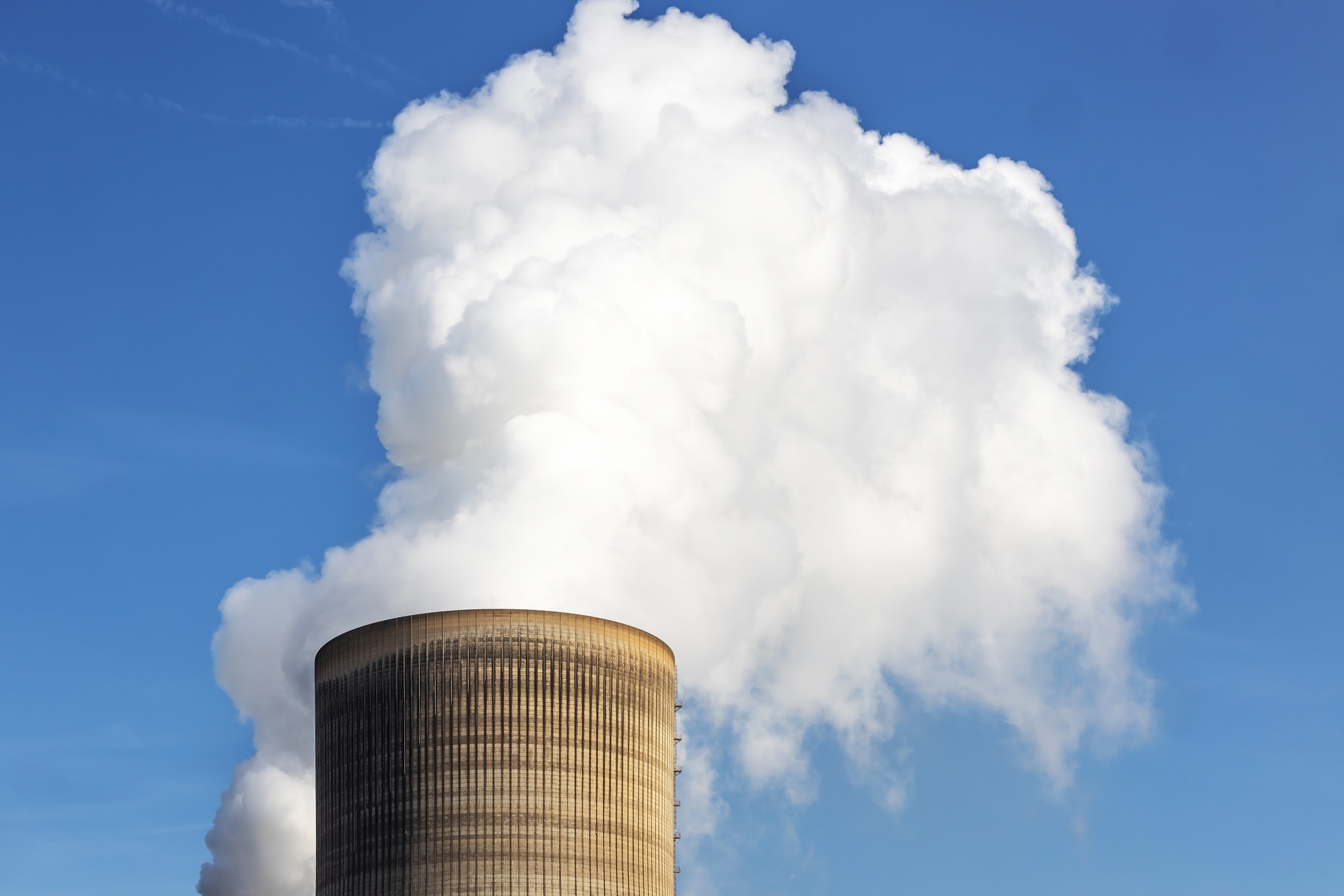
Michelle Solomon, senior policy analyst at Energy Innovation, told ABC News that “clean coal” is a bit of a misnomer, sometimes referring to technologies that physically clean coal before it is burned and sometimes meaning devices that capture carbon after it's released.
"Burning coal could never be technically considered clean regardless of the treatment applied to it before combustion – it will always emit the largest concentration of greenhouse gases of any fossil fuel, and soil and water pollution from coal and coal ash (what's left after it's burned) will never go away,” Solomon said. “Even the best technologies that reduce air pollutants like sulfur and nitrogen oxides still allow many of these to get through."
STOCK PHOTO/Getty Images
These technologies are also not widely used in the U.S. According to a December 2023 report from the Congressional Budget Office, 15 CCS facilities are operating in the United States. And none of them are being used at coal-burning power plants. The CBO also found that the 15 facilities can capture "0.4% of the United States' total annual emissions of CO2."
CCS technology is also costly.
"CCS does come with a pretty large price tag, which is a concern as 99% of the country's existing coal fleet already costs more to continue operating than replacing that generation with new local renewable energy projects," Solomon noted.
Data shows that the rising cost of fuel, as well as the cost of operating and maintaining the aging power plants, is driving up the cost of generating electricity from coal power.
“Why would you keep investing in something that's at the end of its life already, when you have these cheaper resources?” Solomon added.
Before the Trump Administration's push to revive coal power, coal's use for power generation had been waning. Coal-fired electricity generation has largely been replaced by other sources, primarily natural gas and renewables. As the production of cleaner alternatives grows, the reliance on coal to meet the country’s energy needs diminishes.
The EPA says that “coal construction has significantly declined since the 1970s and 1980s, with no utility-scale coal construction occurring in the past decade.”
Popular Reads
The EPA added that “As of 2023, coal generation is one-third of its peak level in 2007, while natural gas generation has more than doubled and wind and solar generation have greatly expanded, together increasing seven-fold since 2007.”
In 2023, coal accounted for about 16% of U.S. electricity generation, according to the agency. In 2000, it was more than 50%.
And the EIA found that the most significant factor in recent reductions of energy-related carbon dioxide emissions in the U.S. has been the decline in coal usage.
Renewables are helping meet growing energy demand
Across the world, renewables are overtaking coal for power generation, boosted by record deployment of solar energy, according to the International Energy Agency (IEA).
More than 90% of new renewable projects are now cheaper than fossil fuel alternatives, according to the International Renewable Energy Agency (IRENA). In 2024, solar photovoltaics (PV) were, on average, 41% cheaper than the lowest-cost fossil fuel alternatives, while onshore wind projects were 53% cheaper.
The IEA highlights that surging energy consumption will likely not derail global sustainability efforts, as rapidly expanding low-emission energy sources, such as renewables and nuclear energy, will provide record-high electricity generation and offset additional global demand over the next three years. Renewable energy sources, including solar, wind and hydropower, are forecast to meet over 90% of the global electricity demand growth through 2030.
These changes are already delivering measurable environmental benefits. In 2024, carbon dioxide emissions in advanced economies dropped to their lowest level in 50 years. According to the IEA, the deployment of solar, wind, nuclear, electric cars, and heat pumps since 2019 is now preventing an estimated 2.6 billion metric tons of carbon dioxide from being released into the atmosphere each year.
Trump continues to tout coal
Despite the global transition to cleaner energy sources, the Trump Administration continues to tout the benefits of coal and provide funds and support for maintaining existing plants and building new ones.
In February, President Trump, joined by Secretary of the Interior Doug Burgum, EPA Administrator Lee Zeldin and a host of coal executives and coal miners, touted coal as America’s most reliable and affordable energy source at a White House meeting dubbed “The Champion of Coal Event.”
The event featured the President receiving the “Undisputed Champion of Beautiful Clean Coal” award from the Washington Coal Club, recognizing him as an advocate for coal power.
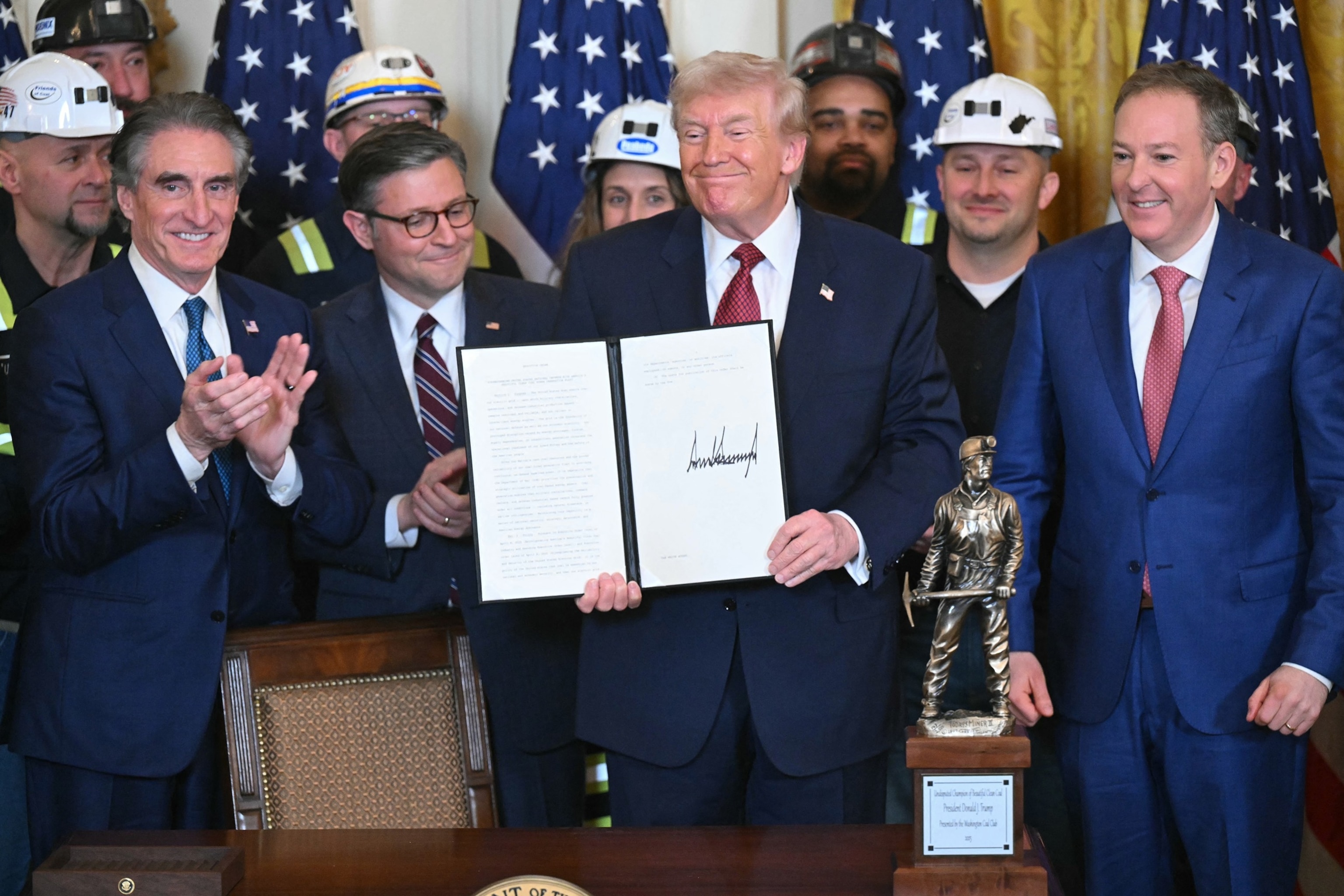
President Donald Trump holding a signed executive order directing the military to purchase electricity from coal-fired power plants during a "Champion of Coal" event at the White House, Feb. 11, 2026.
Saul Loeb/AFP via Getty Images
During his remarks, where the President joked that his administration has forbidden the use of the word “coal” without adding the words "beautiful, clean” before it, Trump touted that he saved 74 coal power plants from “crushing restrictions and closures that would have been forced to shut down in the very immediate future.”
Trump added that the Tennessee Valley Authority would keep two major coal power plants operating and that the Department of Energy would provide additional funds to keep coal plants in West Virginia, Ohio, North Carolina and Kentucky online.
Although Trump claimed that coal “requires no subsidies” at the event, in September, the Department of Energy "announced a $625 million investment to expand and reinvigorate America’s coal industry, aiming to boost energy production and support coal communities nationwide.”