NEWYou can now listen to Fox News articles!
My 13-year-old son’s "social studies" textbooks appear to be written by committees whose chief concern is to dull boys’ minds in order to make them open to indoctrination by politically correct dictum.
Indeed, the very term "social studies" was promulgated by a Progressive Era committee.
"The social studies are understood to be those whose subject matter relate to the organization and development of human society, and to man as a member of social groups," decided the National Education Association’s (NEA) Committee on Social Studies in 1916. They thought it would be better to present history in the context of social narratives to teach politically useful interpretations.
OBAMA TAKES NEW SWIPE AT FOUNDING FATHERS AHEAD OF AMERICA’S 250TH BIRTHDAY: 'DEEP FLAW'
The bad idea soon spread across the land.
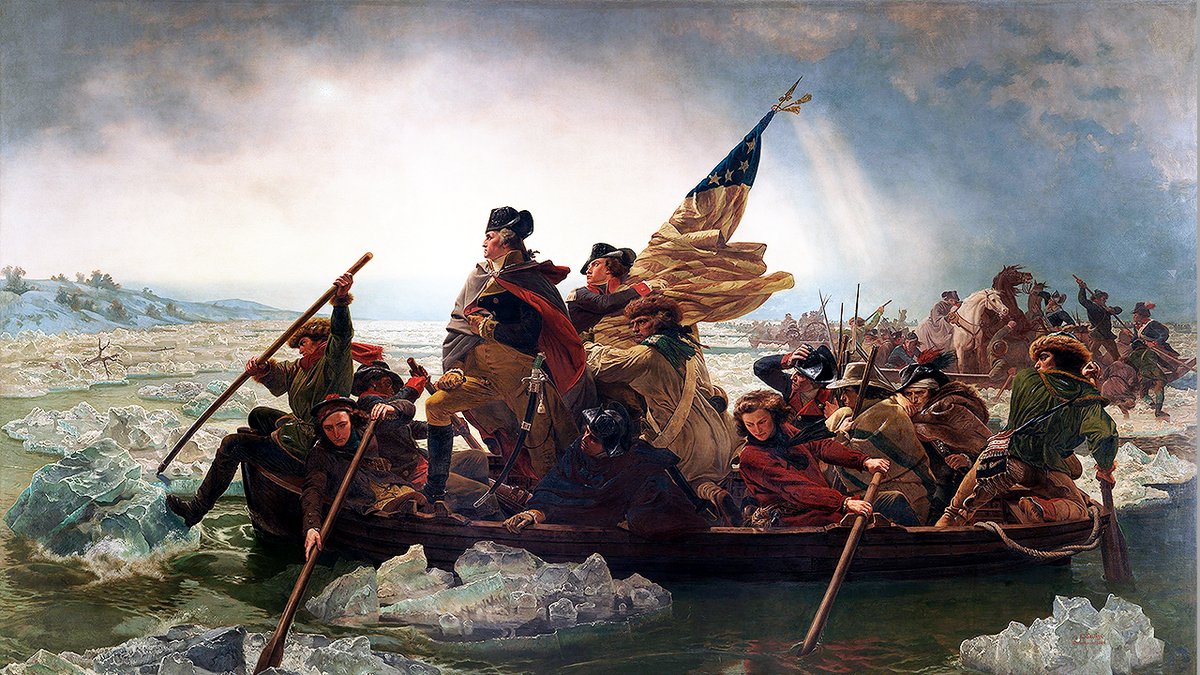
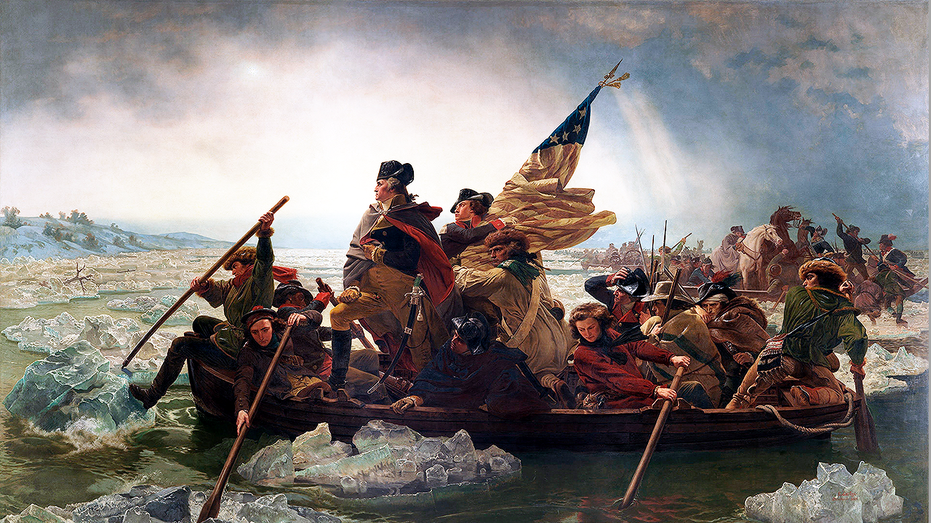
This painting, Washington Crossing the Delaware (by Emanuel Leutze, American, 1816-1868), 1851, shows George Washington's crossing of the Delaware River on the night of Dec. 25-26, 1776, as part of a surprise sneak attack on the British Army during the American Revolutionary War. (GraphicaArtis via Getty Images)
And so boys, now for more than a century, have not been told the real story about how George Washington had two horses shot out from under him in the Battle of the Monongahela in 1755, yet still attempted to get the stubborn British general to change tactics as they were being slaughtered, and when this failed, how a then 23-year-old Washington saved what was left of the British army.
Today’s textbooks don’t set the scene to vividly show how Washington rallied a frozen army to cross the Delaware River to take Trenton on Christmas in 1776. They certainly don’t put the boys in the room to show an older Washington wiping his glasses as he made his former officers feel shame for attempting to make him a dictator or king in the Newburgh Conspiracy in 1783.
SECRETS OF REVOLUTIONARY WAR BATTLEFIELDS EMERGE 250 YEARS AFTER AMERICA'S FOUNDING
No, all of those stories have, at best, become dead dates on a page.
The stories of adventure and human achievement are gone. In their place are narratives about social ills and the conflicts between races, men and women, the rich and the poor.
All of those are important themes, but instead of honestly putting today’s students in the footsteps of human action, our boys are drowned in passively written prose, or worse, in preachy diatribes, as if to purposely uninspire them — or perhaps to safely, as committees will, navigate around the real things that teach.
DISCOVERIES THAT RESHAPED WHAT HISTORIANS KNEW ABOUT AMERICA'S FOUNDING FATHERS
We now wonder why our boys are struggling in school. When we do, we talk about how growing boys need to get up from those rows of desks, move around, play sports and experiment. Again, that is all true, but no one is talking about how real tales of adventure have been turned into thin politically correct gruel.
Instead of just telling boys how many patents Thomas Edison had or simply reporting that he gave us a long-lasting incandescent lightbulb, how about telling them how he was tossed out of school for being "addled" when he was a boy? How about teachers explaining about how one of Edison’s experiments set fire to a train when he was 12 years old — a period in which he was busy printing his own newspaper on that train?
As they do, they could explain that just after he was thrown off that train, the stationmaster at Mount Clemens — who owed Edison for saving his son’s life — taught Edison how to be a telegraph operator and so helped to set the course of his life and thereby changed the world. An educator could then set the scene of Edison, much later, as he ran his "Invention Factory," a place that must have inspired the Tony Stark (Iron Man) character.
If a teacher started telling real stories of adventure like these, I guarantee the boys in class would sit still a lot longer and listen a lot more attentively. The real stories stay with us. Indeed, within them are the themes that school administrators, via social-studies classes, want to emphasize; only, instead of dumbed-down narratives designed to indoctrinate, they’d be teaching well-rounded, honest history.
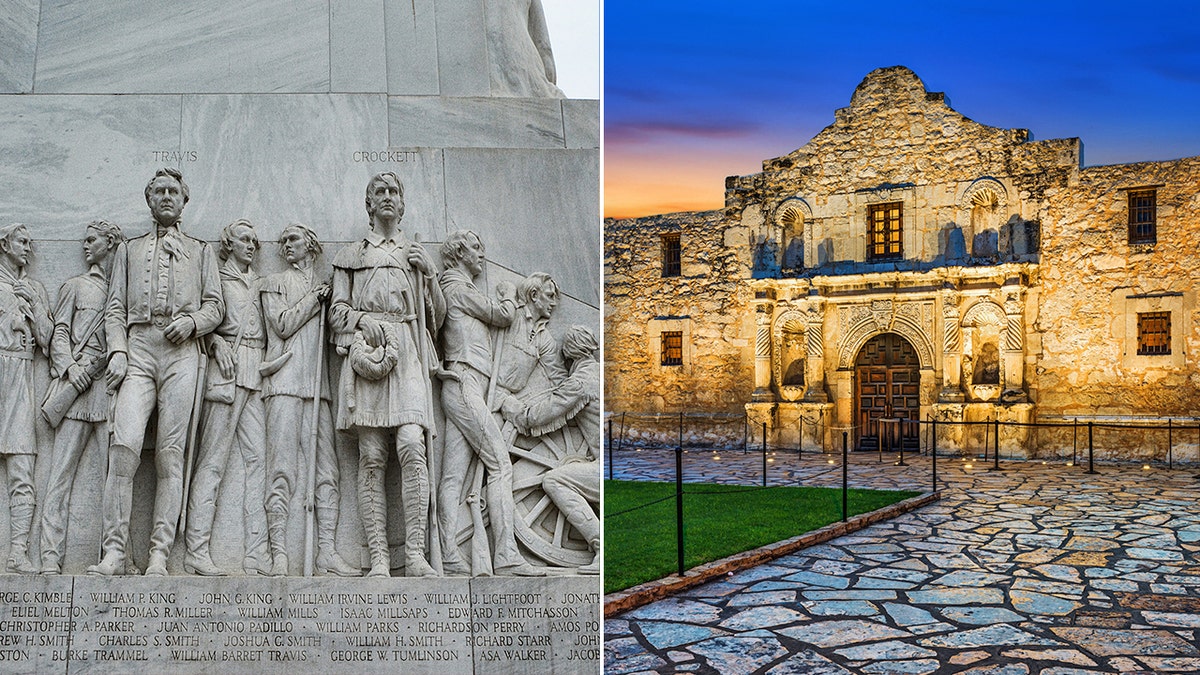
A statue honors Davy Crockett and others who lost their lives in the Battle of the Alamo, which fell to Mexican troops in 1836. (iStock)
Consider Davy Crockett. We could toss out his years and note that he was caught between the cultural friction then occurring between people of European descent moving west and members of Native American tribes. Or we could talk about his heroic stand against the Indian Removal Act and how, after he lost his seat in Congress the second time because of this moral stand, he said (this is the popular paraphrase of the quote), "You may all go to hell, and I will go to Texas." Then, talk about his last stand at the Alamo and even show a picture of the knife he died fighting with — it is now on display in the San Jacinto Museum in Harris County, Texas.
Boys would go home still talking about that!
CLICK HERE FOR MORE FOX NEWS OPINION
Instead of doing any of that, the committees who write our kids’ textbooks flipped the script in the Progressive Era so they could reduce the great men of history into useful caricatures as they shoved history into politically correct filters.
The stories of adventure and human achievement are gone. In their place are narratives about social ills and the conflicts between races, men and women, the rich and the poor.
CLICK HERE TO DOWNLOAD THE FOX NEWS APP
Parents need to push back, as the real stories are what excite and teach boys. Real stories about the Founders and other great leaders stay with us. Anyone who has heard about Teddy Roosevelt’s capture of the three outlaws in Dakota Territory in 1886 can picture how he marched them at gunpoint for 36 hours straight and that, after getting them to the town of Dickinson, everyone, including the bad guys, was surprised he had not simply hung them on the spot.
America has some of the coolest heroes, but we don’t do a good job these days of telling their stories. This is, of course, why I wrote "Cool Heroes for Boys—20 True Tales of Adventure" for my son and for America’s boys, but don’t just hand them a book. Rather, talk to them about these heroes and all they faced and what they got right and wrong. As you do, you’ll find that it’s the real stories of adventure that gets boys interested in learning.