Nature reserve helping restore crane population
Richard Daniel,at RSPB Lakenheath Fenand Alice Cunningham

 PA Media
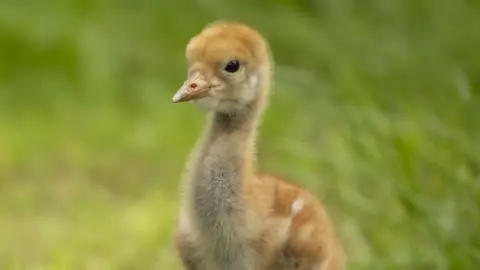
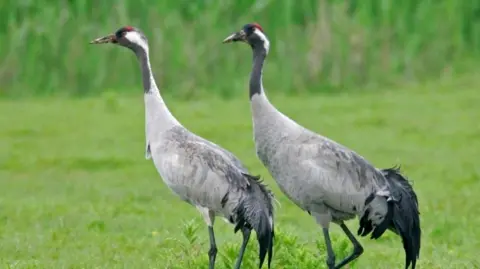
A nature reserve has played a vital role in helping restore numbers of the UK's tallest bird species during a record-breaking breeding year.
The RSPB's Lakenheath Fen site in Suffolk has been home to common cranes since 2007, with three breeding pairs currently established at the reserve.
The species went extinct in the UK about 400 years ago due to overhunting and the loss of wetlands, but last year saw a record 37 chicks born across the country.
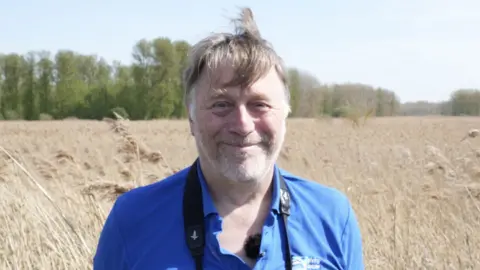
Dave Rogers, site manager of RSPB Lakenheath Fen, said rebuilding the population was a "slow process" and he felt honoured several birds had chosen the reserve to raise their chicks.
 PA Media
Cranes are more than a metre tall and their call can be heard up to 3.5 miles (5.6km) away.
Last year, the RSPB recorded 87 pairs across the UK with 37 chicks, bringing the total population to about 250.
According to the RSPB, the bird went extinct in the 1600s before a small number of wild cranes from mainland Europe ventured to the Norfolk Fens.
Despite 2025 being a record-breaking year, cranes are still at risk due to climate change disrupting their wetland habitats.
The birds at Lakenheath Fen enjoy the site's reedbeds which provide access to water away from humans.
Since 2007, the site has seen 26 chicks raised and in 2024 the team also created "runways" - areas of open space - to help the birds safely take flight.
 John Fairhall/BBC
Rogers said he believed there was more room for additional pairs at Lakenheath, but the birds could be territorial.
"We might be able to squeeze in additional birds, but it's a question of how aggressive a new pair is going to be and how tolerant the existing birds are going to be to the new pair," he said.
"We might be able to get four pairs; we keep our fingers crossed.
"They only lay two eggs so they can only rear a maximum of two chicks a year.
"Then it's probably three to five years before the young cranes pair off and settle down.
"It usually takes them a couple years to learn to be good parents, so it's a slow process building up a crane population."
 John Fairhall/BBC
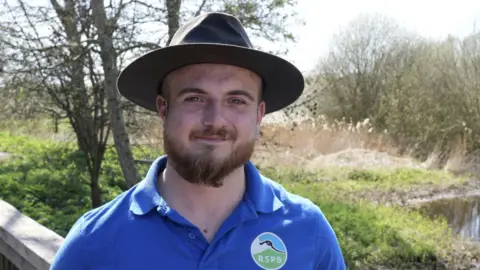
Haydn Fox, assistant warden at RSPB Lakenheath Fen, explained the pairs mate for life and are extremely loyal to each other.
"We know they're nesting when we start seeing single cranes out in flight," he said.
"They're just doing a change over on the eggs, so the other will go and feed, come back and relieve their partner of the duty."
Fox said it had been hard not to get attached to the pairs at the site, near Lakenheath railway station and just off the River Little Ouse, which forms the border with Norfolk.
"They're such majestic birds when they're in flight, they've got their own personalities as well," he said.
"We know the pairs really well here; you shouldn't humanise them, but naturally we do... it's lovely to see them all the time."
 John Fairhall/BBC
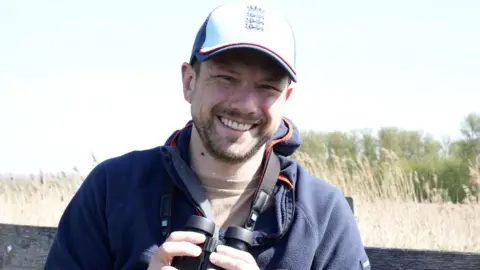
Kevin Middleton is a bird watcher who visits RSPB Lakenheath Fen.
He said he had seen a few of the cranes at the site over the years which "always brightens up your day".
"They are so big," he said.
"When you see something that big it's incredible and it really does make you [think twice] about something so big and heavy going through the sky."
He said the record numbers of chicks was a "great success story".
"If you'd have told me when I was seven or eight and first getting into bird watching that I'd be seeing cranes in my home county, I'd have laughed," he continued.
"But here they are. You do see them and you do hear them as well.
"It is a success story and perhaps one of the few that's out there at the moment."
Do you have a story suggestion for Suffolk? Contact us below.
Related internet links